
IN RÅSPÅR
„Cartea mea preferatå e VIATA. Nu existå carte mai mare, mai importantå, pe care så-ti pui numele. Viata tråitå ca om liber… Chiar în Infern – si noi am parcurs Infernul – s-a putut tråi astfel. Desigur, plåtind din greu, nu era posibil altfel, cu jertfe, cu riscuri, cu dureri, cu disperåri… dar s-a putut. Sacrificând câte din clipele vie¡ii – ani, vârste, sacrificând, o, Doamne, uneori chiar arta si atâtea dintre bucuriile existen¡ei. Ei bine, a meritat totul, nu regret nimic. E o carte, practic, terminatå. Acum, îmi pregåtesc notitele pentru epilog. Cel putin tipograful acestei cårti – tipograful divin – nu e gråbit, asteaptå så-i predai manuscrisul când va fi gata.”
IORDAN CHIMET – Interviu acordat lui B. Elvin în august 1991
Iordan Chimet este un ireductibil încåpåtânat. Nimeni si nimic nu l-ar putea face så creadå cå n-are dreptate, cå adevårurile lui nu sunt singurele posibile. Tot ce-a tråit si a întreprins, tot ce-a gândit si a scris îl singularizeazå si chiar îl însingureazå, pentru cå nu l-a interesat niciodatå dacå ideile si credin¡ele lui sunt sau nu pe placul altora, în acord cu vreo tendintå sau „linie” Nu se abate nici cu o iotå de la sistemul de valori – perfect structurat, strict, întemeiat pe cele mai generoase principii ale umanismului, democratiei si libertåtii de constiin¡å si în acelasi timp foarte personal, al lui si numai al lui – pe care si-a întemeiat considerabila operå culturalå. O performantå unicå îl distinge, pe de-o parte, de toti cei care, din intransigentå, au refuzat, la fel ca el, orice compromis si, pe de altå parte, de toti cei care au realizat, la fel ca el, creatii depåsind cu mult plafoane impuse: råmânând tot timpul în afara rândurilor, acceptându-si situa¡ia de pus la index, de inapt pentru functii, stipendii, onoruri, a reusit totusi, prin perseveren¡a care-l face så fie ceea ce este, så dea culturii românesti opere si momente de referintå în domenii diverse într-o vreme când aproape nimeni nu îndråznea så abordeze temele alese de el, så stabileascå legåturi strânse cu mai multe figuri de prim plan ale culturii mondiale decât orice alt român, determinându-le så se implice direct în originalele lui demersuri si så fie considerat un reper spiritual de elita mai multor genera¡ii de cititori.
Antologia inocen¡ei, numele sub care-si aminteste toatå lumea de Cele 12 luni ale visului, cea mai cunoscutå dintre cår¡ile dåruite nouå, copiilor si nepo¡ilor nostri de Iordan Chimet, este o chintesentå a tuturor însusirilor si efectelor enumerate mai sus. In 1972, când a apårut, a frapat în primul rând prin frumuse¡ea, ingeniozitatea si elegan¡a punerii în paginå, versurile si proza alternând cu desene semnate de pictori si graficieni la fel de valorosi ca autorii textelor. La a doua privire, impresiona galeria numelor celebre, de pe toate meridianele, incluse în aceastå antologie a excelen¡ei. Dar abia citind cartea si privind de aproape fiecare ilustratie, te påtrundeai de spiritul ludic care face atât de simpaticå aceastå imersiune totalå într-o lume a ingenuitåtii si sinceritåtii, a nevinovåtiei si a cåldurii sufletesti, simteai cå te desprinzi de tot ce este råu si urât, în compania unor oamenii cu adevårat mari care n-au uitat niciodatå ce înseamnå så fii copil, nu si-au pierdut cheful de joacå si au cultivat cu har bucuriile simple.
Nici pânå în 1972 si nici din 1972 încoace nu s-a mai publicat în România ceva care så semene cu aceastå antologie a puritåtii si a gingåsiei. Intre timp, înså, opera lui Iordan Chimet a fåcut si ea o carierå sui-generis. Sute, poate de mii de citititori care au emigrat dupå aceea din România, au luat-o cu ei, desi cântårea nepermis de greu în bagajul minuscul îngåduit de statul comunist celor care påråseau definitiv tara. Era amintirea a ceea ce fusese totusi frumos, curat, într-o copilårie si o adolescentå maculate de minciuna înconjuråtoare. Mult mai mul¡i au påstrat-o în casele lor de aici ca pe o rezervå de frumuse¡e si luminå. Aståzi, a devenit aproape o raritate bibliofilå, dar si un magnet care a atras alte file de poveste, alte desene de basm, autori ilustri, între ei si laureati Nobel, au fost încântati de neasteptata modalitate de punere în valoare a unora dintre creatiile lor si, odatå cu scrisorile lor de mul¡umire si apreciere, au trimis noi contributii. O parte din corespondenta prilejuitå de Antologie a fost incluså de Iordan Chimet în Cartea prietenilor mei. Imensul material care s-a adunat pe aceastå cale asteaptå så fie asezat de autor în patru noi volume de literaturå si de graficå a inocentei.
Cinefili påtimasi mi-au spus cå au învåtat så iubeascå inteligent filmul din cartea Eroi, fantome, soricei, publicatå în 1970 (si a cårei versiune cehå a fost editatå, asa cum merita cu adevårat, ca o operå de artå). A fost (anterior Antologiei inocen¡ei, si ea mai premiatå si mai elogiatå în stråinåtate decât în tarå). primul caz în care unul dintre proiectele culturale ale lui Iordan Chimet, a avut un råsunet si urmåri surprinzåtoare, paradoxale.
In 1976, scriitorul a conceput si organizat un spectacol de înaltå tinutå si de mare efect pentru a sårbåtori bicentenarul Statelor Unite, adunând o mie de oameni în jurul Bibliotecii americane din Bucuresti, într-o vreme în care frecventarea acestei institu¡ii de culturå era aproape un delict. Mai târziu, avea så realizeze cea mai reprezentativå expozi¡ie de artå plasticå latino-americanå våzutå vreodatå în România.
Toate aceste evenimente culturale si altele, puse la cale în epoca „muncii colective” si a unei stricte ierarhii a råspunderilor au fost ini¡iate si duse la bun sfârsit de un om fårå „spate”, fårå sprijinul vreunei oficialitåti sau institutii. Ambitioasele si laborioasele proiecte, mesterite si cizelate pânå dincolo de limita superioarå a posibilului, au fost zåmislite si perfectate fårå ostenta¡ie, fårå tam-tam, în afara oricårei structuri care så le sprijine, så le înlesneascå, så le protejeze.
Iordan Chimet nu se dezmin¡ea: la fel de discretå, de modestå în aparen¡å si de eficientå fusese si participarea lui realå, dar de care nu avea så facå vreodatå caz, la rezisten¡a împotriva opresiunii comuniste. Fåcuse parte dintr-un grup care ajuta familiile celor persecutati de regim, a plåtit pentru nesupunerea lui la „comandamentele epocii” prin surghiun: a fost alungat, ani de-a rândul, dintre cei care aveau dreptul så scrie sub propria lor semnåturå sau måcar så råmânå în profesii pe måsura calificårii lor. Si-a asumat aceastå excludere, a tråit ca si cum el însusi si-ar fi ales condi¡ia si, ca si cum societatea în care nu i se îngåduise så råmânå si så se manifeste nici n-ar fi existat, a slefuit în liniste opere cu totul imune la constrângerile ei.
Nici pânå în 1989 si nici dupå 1990 nu s-a låsat recrutat de vreuna dintre coteriile mai mult sau mai pu¡in literare, nu s-a implicat în dispute între grupuri de interese, n-a fost ispitit de onoruri, de câstiguri usoare, de mondenitå¡i. Tine mult la prieteniile pe viatå pe care le cultivå ca nimeni altul, dar are prieteni, nu grupuri de prieteni. Sunt oameni ci care are afinitåti, cu care-i place så comunice si care, mai ales, împårtåsesc credinta lui în culturå, în frumos, în valori morale fundamentale.
Acest tip de tinutå, acest orgoliu nemåsurat al modestiei, al incoruptibilitåtii, al detasårii de meschinåriile datului din coate, au fost din totdeauna si sunt si aståzi incompatibile cu o existentå usoarå, înlesnitå. In anii ’60 – ’80, Iordan Chimet invoca dreptul omului de a fi liber si de a-si cåuta fericirea, de a fi demn si de a nu se supune dictaturii, scriind despre westernuri, despre desene animate si despre comedia burlescå, despre grafica americanå si despre exemplul artistilor plastici latino-americani, abordând în råspår teme tabu. Dupå 1990, când oricine putea scrie oricum despre orice, a renuntat la abordårile oblice si a publicat, una dupå alta, cårtile care påreau så-si fi asteptat de multå vreme rândul pentru a marca Iesirea din labirint. Este vorba de dictionarul-sintezå al identitå¡ii românesti intitulat Dreptul la memorie (patru volume), de antologia Momentul adevårului, de cårtile despre Mihail Sebastian si despre volumul de eseuri Cele douå Europe, cele douå Românii.
Caracteristicå pentru personalitatea iesitå din comun a lui Iordan Chimet este råmânerea lui în afara rândurilor si dupå ce fosti diziden¡i si noi converti¡i la anticomunism s-au avântat în cruciadele „societåtii civile”, o formulå de luptå politicå deghizatå în apolitism. Refuzând si de data aceasta ideia de înregimentare, si-a structurat, de fapt, toate demersurile publicistice în jurul ideii de societate normalå, cu adevårat „civilå”, o societate democraticå fidelå celor mai bune dintre modelele de gândire si comportament din România antebelicå. Atunci exista, functiona, se fåcea simtitå –tine el så aminteascå – societatea civilå care a supravie¡uit si sub regimul dictatorial din anii celui de-al doilea råzboi mondial, opunându-i-se si opunându-se mai cu seamå celor ce se stråduiau så întoarcå tara cu fata spre trecut, spre întuneric. Nimeni n-a scris atât de råspicat, atât de îndurerat, despre nedreapta evaluare a experientei democratice a României de cåtre o anume categorie puternicå, dominantå, de elitisti contemporani.
Este, din nou, o atitudine în råspår, o raportare polemicå la noile conformisme si la manifestårile de intolerantå, de îngustime de spirit, ale nostalgicilor unui pontificat cultural care, de fapt, nici måcar n-a existat, intelectualitatea româneascå din anii premergåtori celui de-al doilea råzboi mondial fiind – si în majoritatea ei si prin cei mai influen¡i si valorosi exponenti – refractarå la extremismele de dreapta, de stânga si de pe orice alte buze ale pråpastiei. Pentru Iordan Chimet, „România normalå” a fost o „Românie moralå” care „nu s-a låsat intimidatå si si-a apårat statutul modern de societate la care au aspirat în secolul precedent generatiile cultivate”. Departe de influen¡a care i se atribuie aståzi, „grupul de emuli ai lui Nae Ionescu, cunoscut aståzi sub numele de Tânåra generatie, de care se face atâta caz aståzi, acordându-i-se o notorietate si o influentå de care nu s-a bucurat în timpul existen¡ei sale”... „n-a fost o generatie culturalå, cum pare så creadå, uneori, noua criticå literarå din zilele noastre”.
Precisa, documentata corectare a analizei valorilor si a mentalitåtilor interbelice nu avea cum så råmânå nesanctionatå de noua nomenclaturå culturalå, intolerantå cu iconoclastii nedoritori så se prosterneze în fa¡a celor aureolati de ea post-mortem ca lideri de opinie într-un trecut în care fuseserå nesemnificativi si într-un prezent si un viitor care trebuie så le treacå cu vederea, nu så le ridice în slåvi, råtåcirile tinere¡ii. Din nou, Iordan Chimet îsi plåteste nonconformismul printr-o perfidå dar implacabilå marginalizare. Degeaba l-am cåuta în Academia Românå sau în oricare dintre institu¡iile care fac si desfac în materie de culturå, noii istorici ai literaturii îl ignorå sau, în cel mai bun caz, îl minimalizeazå. Tot de unul singur, în continuare sårac, la fel de demn, mereu dispus så punå la cale proiecte culturale imaginative, se ocupå de valorificarea creatiei poetilor de limbå germanå din Bucovina, ajutå pictori români så se facå cunoscuti în afara tårii, editeazå opere uitate, face nenumårate alte lucruri care nu aduc nici bani, nici glorie, nici notorietate, dar îi dau satisfactia de a-si fi îndeplinit datoria fatå de cultura si fatå de civlizatia tårii sale.
Mi-am dat seama de permanenta tineretii lui spirituale, de preocuparea lui fatå de viitorul noilor generatii, dar si de intransigen¡a lui fatå de orice imposturå si fatå de orice abatere de la onestitatea intelectualå, moralå, esteticå, urmårind modul în care tine så-si exercite mandatul de presedinte al juriului concursului de eseuri lansat de Clubul Kiwanis Bucuresti. Trei ani de-a rândul, a citit sute de texte scrise de elevi de liceu. Le ierahizeazå în functie de autenticitatea tråirilor si de capacitatea de a exprima ståri de spirit si sentimente tråite, nu simulate. Apreciazå fronda spiritualå, dar detestå cinismul, pedanteria, îi depisteazå fårå gres pe tocilarii si pe plagiatorii care – singuri sau ajutati de pårinti sau de profesori – fac paradå de o falså erudi¡ie. Cautå cu febrilitate, în aceste mostre de gândire tânårå, semnele unui elan, al unor nåzuinte si fråmântåri care så-i spulbere teama de marasmul prevestit de noua idolatrizare, pe de-o parte a Vt¡elului de aur, pe de altå parte a apostolilor obscurantismului.
Marea carte a lui Iordan Chimet, „cartea numitå VIATA”, este ca si cartea de cåpåtâi pe care a dåruit-o bibliotecii personale a fiecåruia dintre noi, un elogiu al Inocen¡ei, al Binelui din om nealterat de agresiunea råutåtilor din lume. Ea continuå så se scrie fårå rabaturi de calitate si fårå a avea nevoie de retusuri. Tipograful så aibå råbdare, multå råbdare!
Felicia Antip
Sunday, June 25, 2006


Strazile copilariei- de Edelina Sterling-Stoian
- STRAZILE COPILARIEI -
Motto: "Nu se poate sa nu revad acum Bacaul.
Vor unii sa ma creada sau nu, vor
unii sa ma iubeasca sau nu, eu nu
pot trai multa vreme fara strazile
copilariei"
(Silvia Marcovici, intr-un interview acordat lui Iosif Sava in
"Muzicantii pe acoperis - muzicieni evrei la noi si in lume".
Editura Hasefer, Bucuresti 1995)
*
Fintina de pe malul Bistritei cu galeata de lemn si cana de
tabla, legata cu lant. Inca imi place sa beau apa rece din cani de
metal, miroase a riu si padure. Mama lua rufele sa le spele in
Bistrita, noi, copiii, ne jucam punindu-le pe plute, sa se zvinte. Am
vazut un plutas in camasoi, gol de la briu in jos, m-am speriat, nu
mai vazusem asa ceva, am fugit la mama sa-i spun ca e "un om mare" pe
pluta, ii atirna un animal rau pe burta, precis il doare, mama mi-a
spus sa fiu cuminte si sa ma intorc la joaca.
Gangul dinspre strada, unde il asteptam pe tata sa se intoarca acasa.
Imbracam frumos papusile, le aliniam la intrare si le spuneam sa stea
cuminti ca vine tata. Ne lua pe toate in brate si intra cu noi,
ciorchine, in casa.
Rafturile din bucatarie cu borcane de dulceata, serbet, untura
de gisca. Le-am rasturnat hirjonindu-ma cu fratele meu. Au cazut cu
tot cu raft, praf s-au facut. Mama nu ne-a certat, statea muta intr-un
colt si plingea, se facuse tandari munca ei de un an. Mai bine ne-ar
fi certat.
Baietelul vecinilor de care eram indragostita. Ma piteam sub
fereastra lui si-l fluieram sa vina la joaca, eram sigura ca asa fac
indragostitii care se iubesc romantic. Intr-o dimineata, vazind ca nu
iese, m-am ridicat pe virfuri sa ma uit in camera: era intins pe pat
cu burta in jos, doctorul tocmai ii punea termometrul in poponet. Nu
l-am mai iubit.
Strada larga, pomii de pe margini, zapada care scirtiia, sania cu cai
cu care ne duceam la gara s-o asteptam pe Tante Anutza, de la Piatra
Neamtz, sora tatei. Parfumata, eleganta, vesela si frumoasa, fusese
Miss Moldova. Cam prostuta. Avea sutiene "fara capac" ca niste hamuri
(tinea sa i se vada sfircurile prin bluzele de matase moaaale), papuci
de casa cu tocul inalt si o multime de borcanase cu creme care
miroseau frumos. De cite ori intru intr-un magazin de cosmetica, am
senzatia ca Tante Anutza e linga mine. A murit nu de mult la Nazareth,
devenise aproape cheala.
Oraselul copiilor. Brazi inalti, ghirlande de becuri colorate, casute
de pitici in forma de ciuperca, "darurile" atirnate in pomi, cutii
goale frumos impachetate. Gogosile fierbinti, vinzatorul mustacios, cu
obrajii rumeni, le pescuia cu linguroiul din cazanul cu ulei incins si
ni le servea pudrate cu zahar intr-o bucatica de hirtie, sa nu ne
murdarim degetele. Pentru mai multa siguranta, mama ni le freca mereu
cu batista.
Alvita din fata cinematografului "Timpuri noi". Abia asteptam sa se
termine filmul sa-mi primesc portia. Siropul de 50 de bani, de lamiie
sau zmeura. Nu ma puteam decide, imi placeau la fel de mult.
Vinzatoarea mi le amesteca juma'juma, mama imi dadea bani numai pentru
un pahar.
Plimbarea din "centru". O uram si eu si fratele meu, prea ne
dichiseau: sosete albe trei-sferturi cu ciucuri, pantofi bine
lustruiti, mama imi pieptana coditele pina incepea sa ma doara capul,
apoi aranja freza fratelui meu care ma privea cu furie si scotea
limba, pe cineva trebuia sa se razbune. Parintii se intilneau cu
cunostinte, stateau la taifas in mijlocul strazii, noi ne plictiseam
de moarte. Ne distram catarindu-ne pe statuia lui Vasile Roaita, odata
era sa-mi intre in git sirena, ma impinsese fratele meu prea sus si
nu-mi mai dadea drumul.
Globul de cristal (ce minunatie de culori!) pe care l-am furat
de la vecina noastra de vizavi, doamna Brandes (barbatului ei ii
lipsea un picior, il calcase trenul, dupa accident devenise artagos si
se apucase de crosetat, "e bun pentru nervi" ne asigura doamna
Brandes). S-a suparat pe mine. Nu pentru ca furasem globul, ci pentru
ca nu i-am spus niciodata ca imi place, mi l-ar fi facut cadou. Imi
venea sa intru in pamint de rusine, m-am gindit chiar sa ma sinucid,
mi-i imaginam pe toti cum vor plinge la inmormintarea mea. Cind i-a
venit mamei rindul sa plinga, am renuntat si nu m-am mai sinucis.
Strada Florilor. Acolo locuia doamna Pintilescu, invatatoarea
dintr-a doua. Ma iubea pentru ca raspundeam repede in clasa, altii se
gindeau prea mult. Ma chema uneori la ea, in gradina, stia ca imi plac
bujorii, ma intorceam acasa fericita, cu un buchet mare de bujori.
Dormeam cu buchetul.
Edelina Sterling-Stoian
Motto: "Nu se poate sa nu revad acum Bacaul.
Vor unii sa ma creada sau nu, vor
unii sa ma iubeasca sau nu, eu nu
pot trai multa vreme fara strazile
copilariei"
(Silvia Marcovici, intr-un interview acordat lui Iosif Sava in
"Muzicantii pe acoperis - muzicieni evrei la noi si in lume".
Editura Hasefer, Bucuresti 1995)
*
Fintina de pe malul Bistritei cu galeata de lemn si cana de
tabla, legata cu lant. Inca imi place sa beau apa rece din cani de
metal, miroase a riu si padure. Mama lua rufele sa le spele in
Bistrita, noi, copiii, ne jucam punindu-le pe plute, sa se zvinte. Am
vazut un plutas in camasoi, gol de la briu in jos, m-am speriat, nu
mai vazusem asa ceva, am fugit la mama sa-i spun ca e "un om mare" pe
pluta, ii atirna un animal rau pe burta, precis il doare, mama mi-a
spus sa fiu cuminte si sa ma intorc la joaca.
Gangul dinspre strada, unde il asteptam pe tata sa se intoarca acasa.
Imbracam frumos papusile, le aliniam la intrare si le spuneam sa stea
cuminti ca vine tata. Ne lua pe toate in brate si intra cu noi,
ciorchine, in casa.
Rafturile din bucatarie cu borcane de dulceata, serbet, untura
de gisca. Le-am rasturnat hirjonindu-ma cu fratele meu. Au cazut cu
tot cu raft, praf s-au facut. Mama nu ne-a certat, statea muta intr-un
colt si plingea, se facuse tandari munca ei de un an. Mai bine ne-ar
fi certat.
Baietelul vecinilor de care eram indragostita. Ma piteam sub
fereastra lui si-l fluieram sa vina la joaca, eram sigura ca asa fac
indragostitii care se iubesc romantic. Intr-o dimineata, vazind ca nu
iese, m-am ridicat pe virfuri sa ma uit in camera: era intins pe pat
cu burta in jos, doctorul tocmai ii punea termometrul in poponet. Nu
l-am mai iubit.
Strada larga, pomii de pe margini, zapada care scirtiia, sania cu cai
cu care ne duceam la gara s-o asteptam pe Tante Anutza, de la Piatra
Neamtz, sora tatei. Parfumata, eleganta, vesela si frumoasa, fusese
Miss Moldova. Cam prostuta. Avea sutiene "fara capac" ca niste hamuri
(tinea sa i se vada sfircurile prin bluzele de matase moaaale), papuci
de casa cu tocul inalt si o multime de borcanase cu creme care
miroseau frumos. De cite ori intru intr-un magazin de cosmetica, am
senzatia ca Tante Anutza e linga mine. A murit nu de mult la Nazareth,
devenise aproape cheala.
Oraselul copiilor. Brazi inalti, ghirlande de becuri colorate, casute
de pitici in forma de ciuperca, "darurile" atirnate in pomi, cutii
goale frumos impachetate. Gogosile fierbinti, vinzatorul mustacios, cu
obrajii rumeni, le pescuia cu linguroiul din cazanul cu ulei incins si
ni le servea pudrate cu zahar intr-o bucatica de hirtie, sa nu ne
murdarim degetele. Pentru mai multa siguranta, mama ni le freca mereu
cu batista.
Alvita din fata cinematografului "Timpuri noi". Abia asteptam sa se
termine filmul sa-mi primesc portia. Siropul de 50 de bani, de lamiie
sau zmeura. Nu ma puteam decide, imi placeau la fel de mult.
Vinzatoarea mi le amesteca juma'juma, mama imi dadea bani numai pentru
un pahar.
Plimbarea din "centru". O uram si eu si fratele meu, prea ne
dichiseau: sosete albe trei-sferturi cu ciucuri, pantofi bine
lustruiti, mama imi pieptana coditele pina incepea sa ma doara capul,
apoi aranja freza fratelui meu care ma privea cu furie si scotea
limba, pe cineva trebuia sa se razbune. Parintii se intilneau cu
cunostinte, stateau la taifas in mijlocul strazii, noi ne plictiseam
de moarte. Ne distram catarindu-ne pe statuia lui Vasile Roaita, odata
era sa-mi intre in git sirena, ma impinsese fratele meu prea sus si
nu-mi mai dadea drumul.
Globul de cristal (ce minunatie de culori!) pe care l-am furat
de la vecina noastra de vizavi, doamna Brandes (barbatului ei ii
lipsea un picior, il calcase trenul, dupa accident devenise artagos si
se apucase de crosetat, "e bun pentru nervi" ne asigura doamna
Brandes). S-a suparat pe mine. Nu pentru ca furasem globul, ci pentru
ca nu i-am spus niciodata ca imi place, mi l-ar fi facut cadou. Imi
venea sa intru in pamint de rusine, m-am gindit chiar sa ma sinucid,
mi-i imaginam pe toti cum vor plinge la inmormintarea mea. Cind i-a
venit mamei rindul sa plinga, am renuntat si nu m-am mai sinucis.
Strada Florilor. Acolo locuia doamna Pintilescu, invatatoarea
dintr-a doua. Ma iubea pentru ca raspundeam repede in clasa, altii se
gindeau prea mult. Ma chema uneori la ea, in gradina, stia ca imi plac
bujorii, ma intorceam acasa fericita, cu un buchet mare de bujori.
Dormeam cu buchetul.
Edelina Sterling-Stoian
Bazar...de la Edelina Sterling Stoian
BAZAR
Senzatiile, imaginile, zgomotele, aromele te coplesesc, pun stapinire pe tine. Culori vii, stridente iti atrag privirile, strigatele negustorilor iti strapung timpanele, miresmele te ametesc. E poate singurul loc unde exista inca posibilitatea de a calatori in trecut. Bazarul oriental, simbol al culturii islamice, atrage ca un magnet turistii occidentali. Dar nu toate bazarurile sint identice, nici macar nu se numesc la fel.
In tarile Magrebului, Maroc, Tunisia si Algeria, unde si-a lasat amprenta puterea coloniala franceza, labirintul de stradute inguste, pe care se inghesuie magazine, pravalioare si dughene se numeste SUK, in araba – piata. Din Marrakesh pina la Damasc, din Ierusalim pina la Istanbul, din Beirut pina la Baghdad - toate bazarurile au, insa, ceva in comun si anume - tocmeala. Obicei vechi de cind lumea, de cind se facea negot in zona Nilului, la Tigru si Eufrat. Peninsula araba a devenit iute centrul comertului international cu alimente, textile, metale, pietre pretioase, arme si mai tirziu cu parfumuri, condimente din India, matase din China. Negutatorii erau navigatorii, pietele erau corabiile. Pina cind, in anul 550 inainte de Hristos, vechii persani au inventat primul sistem postal international. Pe o distanta de 2.700 de kilometri, de-a lungul asa-numitei cai regale, incepind din Susa, capitala de atunci a Persiei, trecind prin Armenia, Kappadokia (actuala Turcie), pina in Frigia si Lidia in partea de apus a Asiei Mici, la fiecare 25 de kilometri au fost construite hanuri unde zi si noapte poposeau negutatorii pentru a-si vinde marfa si a-si continua apoi drumul. Acestea au fost inceputurile bazarului. Dar traditia bazarului, asa cum il cunoastem astazi, a aparut dupa moartea profetului Mohammed, in anul 632 dupa Hristos, odata cu extinderea vertiginioasa a Islamului.
Bazarul oriental functioneaza conform unei supreme legi nescrise, a carei respectare este obligatorie atit pentru negustori, cit si pentru cumparatori. Tocmeala. O adevarata arta: clientul trebuie sa para indiferent, neinteresat, cu atit mai neinteresat cu cit negustorul incearca sa-si ridice in slavi marfa. In fiecare bazar, din Magreb pina in Asia Mica, marfurile pentru turisti sint aceleasi: vase de arama, covoare, haine de piele, obiecte din ceramica, rochii brodate cu motive folclorice, imitatii ieftine de ceasuri si genti.. Cind incep sa va iasa in cale dughene cu legume, condimente, papuci din plastic, tenisi ieftini, macelarii de doi metri patrati si frizerii nu cu mult mai mari, cizmari si croitori – inseamna ca ati ajuns in bazarul localnicilor, unde doar arareori se mai rataceste cite un turist in cautare de bijuterii sau parfumuri. Deschide un flacon pe care scrie: parfum de lotus, il adulmeca nerabdator sa patrunda vraja Orientului si constata surprins ca mult-laudatul parfum exotic nu e altceva decit apa chioara. Riscurile şi farmecul bazarului...
Edelina Sterling-Stoian
Senzatiile, imaginile, zgomotele, aromele te coplesesc, pun stapinire pe tine. Culori vii, stridente iti atrag privirile, strigatele negustorilor iti strapung timpanele, miresmele te ametesc. E poate singurul loc unde exista inca posibilitatea de a calatori in trecut. Bazarul oriental, simbol al culturii islamice, atrage ca un magnet turistii occidentali. Dar nu toate bazarurile sint identice, nici macar nu se numesc la fel.
In tarile Magrebului, Maroc, Tunisia si Algeria, unde si-a lasat amprenta puterea coloniala franceza, labirintul de stradute inguste, pe care se inghesuie magazine, pravalioare si dughene se numeste SUK, in araba – piata. Din Marrakesh pina la Damasc, din Ierusalim pina la Istanbul, din Beirut pina la Baghdad - toate bazarurile au, insa, ceva in comun si anume - tocmeala. Obicei vechi de cind lumea, de cind se facea negot in zona Nilului, la Tigru si Eufrat. Peninsula araba a devenit iute centrul comertului international cu alimente, textile, metale, pietre pretioase, arme si mai tirziu cu parfumuri, condimente din India, matase din China. Negutatorii erau navigatorii, pietele erau corabiile. Pina cind, in anul 550 inainte de Hristos, vechii persani au inventat primul sistem postal international. Pe o distanta de 2.700 de kilometri, de-a lungul asa-numitei cai regale, incepind din Susa, capitala de atunci a Persiei, trecind prin Armenia, Kappadokia (actuala Turcie), pina in Frigia si Lidia in partea de apus a Asiei Mici, la fiecare 25 de kilometri au fost construite hanuri unde zi si noapte poposeau negutatorii pentru a-si vinde marfa si a-si continua apoi drumul. Acestea au fost inceputurile bazarului. Dar traditia bazarului, asa cum il cunoastem astazi, a aparut dupa moartea profetului Mohammed, in anul 632 dupa Hristos, odata cu extinderea vertiginioasa a Islamului.
Bazarul oriental functioneaza conform unei supreme legi nescrise, a carei respectare este obligatorie atit pentru negustori, cit si pentru cumparatori. Tocmeala. O adevarata arta: clientul trebuie sa para indiferent, neinteresat, cu atit mai neinteresat cu cit negustorul incearca sa-si ridice in slavi marfa. In fiecare bazar, din Magreb pina in Asia Mica, marfurile pentru turisti sint aceleasi: vase de arama, covoare, haine de piele, obiecte din ceramica, rochii brodate cu motive folclorice, imitatii ieftine de ceasuri si genti.. Cind incep sa va iasa in cale dughene cu legume, condimente, papuci din plastic, tenisi ieftini, macelarii de doi metri patrati si frizerii nu cu mult mai mari, cizmari si croitori – inseamna ca ati ajuns in bazarul localnicilor, unde doar arareori se mai rataceste cite un turist in cautare de bijuterii sau parfumuri. Deschide un flacon pe care scrie: parfum de lotus, il adulmeca nerabdator sa patrunda vraja Orientului si constata surprins ca mult-laudatul parfum exotic nu e altceva decit apa chioara. Riscurile şi farmecul bazarului...
Edelina Sterling-Stoian
Saturday, June 24, 2006


Valahul din Sinai, corespondenta de la Edelina Sterling-Stoian
Valahul din Sinai
'Cine nu cunoaste amaraciunea vietii, nu-i poate aprecia dulceata,
spune un proverb beduin'. Proverb devenit un ritual al legendarei
ospitalitati a beduinilor. Cei care ii viziteaza in peninsula Sinai,
in pustiul Neghev din sudul Israelului, in Egipt, Iordania, Siria,
Maroc sau Sudan, sint intimpinati cu o cafea tare si amara, fiind
serviti apoi cu ceai fierbinte si dulce.
Cuvintul 'beduin', patruns in limba romana prin filiera franceza, isi
are originea in limba araba - 'badu' sau 'bedu' insemnind 'locuitori
ai pustiului' - si sugereaza celor mai multi chipuri aspre, arse de
soare, straie negre fluturind in vintul fierbinte al pustiului,
nisipuri miscatoare, caravane. Timp de secole astfel de imagini nu au
fost departe de adevar. In pustiurile din Orientul Mijlociu si din
nordul Africii numeroasele triburi de beduini nomazi strabateau
deshertul cu camilele si turmele de oi si capre, mereu in cautarea
unor oaze, a unui teren fertil. In secolul 20 camilele au fost
inlocuite treptat cu jeep-uri raminind, insa, companionul cel mai de
pret al beduinilor. Nu numai ca mijloc de transport. Ca furnizor de
lina, piele si lapte, ingredientul de baza al unei inghetate vinduta
cu succes de beduini turistilor, camila a devenit intre timp o
valoroasa moneda de schimb in tranzactii comerciale dintre triburi.
Atasamentul beduinilor fata de camila reiese nu numai din originea
cuvintului, in arabeste 'gamal', din aceeasi familie de cuvinte cu
'frumos'. Mersul leganat al camilei si-a lasat amprenta in versul
clasic al poeziei arabesti, cintecele fredonate de beduini in timp ce
inainteaza cu caravanele in deshert isi au ecoul in muzica arabeasca.
In conditiile vitrege ale pustiului, cea mai mica incalcare de
teritoriu nu era usor uitata sau iertata, iar respectul beduinilor
pentru pericolele si greutatile vietii in pustiu le-a dezvoltat un
profund simt al ospitalitatii. In linistea apasatoare si singuratatea
pustiului, simpla aparitie a unui strain este un eveniment. E
primit cu interes, curiozitate, generozitate si politete, valori
pe care nomazii continua sa puna pret si care se reflecta in
muzica, poezia si proverbele beduinilor.
Astazi, insa, imaginea locuitorilor pustiului este ambivalenta:
doar o mica parte din ei mai sint nomazi, mai ales in ultimele
decenii multi beduini, in special tinerii, renuntind la un mod de
viata strict bazat pe vechile traditii in schimbul vietii moderne.
Cultura beduinilor a supravietuit, insa, fiind apreciata din ce in
ce mai mult ca o raritate. Sistemul tribal a ramas intact, la fel
si mindria si nevoia beduinilor de libertate, de a se impotrivi
constringerilor de orice fel. A ramas neschimbat si statutul
femeilor. Ca forta de munca femeia este indispensabila, are putere
de decizie cind e vorba de copii, dar in multe privinte este
discriminata: nu are voie sa divorteze, doar barbatul poate lua o
astfel de decizie; in cazul mortii partenerului barbatul se poate
recasatori, dar femeia trebuie sa ramina vaduva toata viata si, in
lipsa sotului, sa se dedice copiilor pina la adinci batrinete...
Femei sau barbati, beduinii sint cu totii povestitori captivanti.
Uneori povestesc in... romaneste. Cel putin unul dintre ei. La
manastirea Santa Caterina din sudul Peninsulei Sinai. Cu ani in
urma, cind am vizitat manastirea impreuna cu prieteni cu care vorbeam
in romaneste, am avut surpriza de a constata ca sintem intelesi de un beduin
intilnit in cale, care ne asculta cu interes si care, folosind si citeva cuvinte
romanesti, ne-a delectat cu o poveste poate inventata, dar transmisa ca adevarata
prin viu grai din generatie in generatie. Sa fi fost oare beduinul 'roman' un urmas
al sclavilor adusi in Sinai in secolul 6 din Valahia, Bosnia si Anatolia?
Cert este ca robii adusi de Imparatul bizantin Iustinian
pentru a construi manastirea Santa Caterina s-au amestecat ulterior cu
beduinii din triburile arabesti, convertindu-se cu totii, in secolul
7, la islamism.
Edelina Sterling-Stoian
'Cine nu cunoaste amaraciunea vietii, nu-i poate aprecia dulceata,
spune un proverb beduin'. Proverb devenit un ritual al legendarei
ospitalitati a beduinilor. Cei care ii viziteaza in peninsula Sinai,
in pustiul Neghev din sudul Israelului, in Egipt, Iordania, Siria,
Maroc sau Sudan, sint intimpinati cu o cafea tare si amara, fiind
serviti apoi cu ceai fierbinte si dulce.
Cuvintul 'beduin', patruns in limba romana prin filiera franceza, isi
are originea in limba araba - 'badu' sau 'bedu' insemnind 'locuitori
ai pustiului' - si sugereaza celor mai multi chipuri aspre, arse de
soare, straie negre fluturind in vintul fierbinte al pustiului,
nisipuri miscatoare, caravane. Timp de secole astfel de imagini nu au
fost departe de adevar. In pustiurile din Orientul Mijlociu si din
nordul Africii numeroasele triburi de beduini nomazi strabateau
deshertul cu camilele si turmele de oi si capre, mereu in cautarea
unor oaze, a unui teren fertil. In secolul 20 camilele au fost
inlocuite treptat cu jeep-uri raminind, insa, companionul cel mai de
pret al beduinilor. Nu numai ca mijloc de transport. Ca furnizor de
lina, piele si lapte, ingredientul de baza al unei inghetate vinduta
cu succes de beduini turistilor, camila a devenit intre timp o
valoroasa moneda de schimb in tranzactii comerciale dintre triburi.
Atasamentul beduinilor fata de camila reiese nu numai din originea
cuvintului, in arabeste 'gamal', din aceeasi familie de cuvinte cu
'frumos'. Mersul leganat al camilei si-a lasat amprenta in versul
clasic al poeziei arabesti, cintecele fredonate de beduini in timp ce
inainteaza cu caravanele in deshert isi au ecoul in muzica arabeasca.
In conditiile vitrege ale pustiului, cea mai mica incalcare de
teritoriu nu era usor uitata sau iertata, iar respectul beduinilor
pentru pericolele si greutatile vietii in pustiu le-a dezvoltat un
profund simt al ospitalitatii. In linistea apasatoare si singuratatea
pustiului, simpla aparitie a unui strain este un eveniment. E
primit cu interes, curiozitate, generozitate si politete, valori
pe care nomazii continua sa puna pret si care se reflecta in
muzica, poezia si proverbele beduinilor.
Astazi, insa, imaginea locuitorilor pustiului este ambivalenta:
doar o mica parte din ei mai sint nomazi, mai ales in ultimele
decenii multi beduini, in special tinerii, renuntind la un mod de
viata strict bazat pe vechile traditii in schimbul vietii moderne.
Cultura beduinilor a supravietuit, insa, fiind apreciata din ce in
ce mai mult ca o raritate. Sistemul tribal a ramas intact, la fel
si mindria si nevoia beduinilor de libertate, de a se impotrivi
constringerilor de orice fel. A ramas neschimbat si statutul
femeilor. Ca forta de munca femeia este indispensabila, are putere
de decizie cind e vorba de copii, dar in multe privinte este
discriminata: nu are voie sa divorteze, doar barbatul poate lua o
astfel de decizie; in cazul mortii partenerului barbatul se poate
recasatori, dar femeia trebuie sa ramina vaduva toata viata si, in
lipsa sotului, sa se dedice copiilor pina la adinci batrinete...
Femei sau barbati, beduinii sint cu totii povestitori captivanti.
Uneori povestesc in... romaneste. Cel putin unul dintre ei. La
manastirea Santa Caterina din sudul Peninsulei Sinai. Cu ani in
urma, cind am vizitat manastirea impreuna cu prieteni cu care vorbeam
in romaneste, am avut surpriza de a constata ca sintem intelesi de un beduin
intilnit in cale, care ne asculta cu interes si care, folosind si citeva cuvinte
romanesti, ne-a delectat cu o poveste poate inventata, dar transmisa ca adevarata
prin viu grai din generatie in generatie. Sa fi fost oare beduinul 'roman' un urmas
al sclavilor adusi in Sinai in secolul 6 din Valahia, Bosnia si Anatolia?
Cert este ca robii adusi de Imparatul bizantin Iustinian
pentru a construi manastirea Santa Caterina s-au amestecat ulterior cu
beduinii din triburile arabesti, convertindu-se cu totii, in secolul
7, la islamism.
Edelina Sterling-Stoian
Friday, June 23, 2006


Neveh Shalom- corespondenta de la Edelina
Oaza Pacii
La mijlocul distantei dintre Ierusalin si Tel-Aviv, cocotate pe coline
in plin peisaj de tihna pastorala, se zaresc acoperisurile unor casute
invadate de flori si plante agatatoare. Sint casele unui sat in care
traiesc impreuna, in liniste si pace, evrei si arabi.
Satul cu numele ebraic Neve Shalom si cel arabesc Wahat al-Salam, care
inseamna Oaza Pacii, nu este afiliat nici unui partid sau miscari
politice si este condus in mod democratic de un secretariat general
ales de localnici, cu totii posesori ai cetateniei israeliene.
Cu circa 30 de ani in urma, parintele dominican Bruno Hussar, evreu
nascut in Egipt si convertit la crestinism, a avut viziunea implinirii
unei profetii din Vechiul Testament: `Poporul Meu va trai intr-o oaza
de pace'.
De la manastirea Latrun, nu departe de Ierusalim, a luat in arenda pe
coasta unui deal, cu 25 de centi pe an, pe o perioada de un secol, o
suprafata de teren care avea sa devina satul Neve Shalom/Wahat
al-Salamn, parintele Bruno avind convingerea ca atit evreii, cit si
arabii isi au si trebuie sa-si pastreze propriile drepturi: cel al
evreilor de a trai in statul evreiesc creat in 1948 si dreptul
arabilor de a-si pastra paminturile ca cetateni ai statului Israel.
In 1978 a sosit prima familie a noului sat impreuna cu fonduri pentru
construirea infrastructurii necesara spre a putea fi atrase si alte
familii. In memoriile sale, printele Bruno scria ulterior: ` Ne-am
dorit un mic sat cu locuitori din diferite comunitati din Israel –
evrei, crestini, musulmani care sa traiasca in pace, fiecare dintre ei
pastrindu-si credinta si traditiile si respectindu-le pe ale celorlalti'.
Si au venit oameni din intregul Israel, unii si din strainatate,
pentru a trai alaturi de cei de care fusesera instrainati, dornici sa
inlature bariere ca teama, neincrederea, ignoranta, lipsa de
intelegere, ideile preconcepute si sa le inlocuiasca cu incredere,
respect, intelegere recoproca, prietenie.
Nu intotdeauna e, insa, usor, dupa cum a marturisit intr-un interviu
la televiziunea germana unul din sateni. Howard, crestin englez,
originar din Leeds, a emigrat in Statele Unite, s-a casatorit cu o
evreica impreuna cu care a venit apoi sa traiasca in Oaza Pacii. `E
greu pentru noi toti cind au loc acte de violenta, de o parte sau
alta. Ii cunoastem pe multi dintre cei raniti sau ucisi, israelieni
sau palestinieni. In asemenea momente in sat domneste confuzia si
neputinta', spune Howrd adaugind: `Un lucru este cert: Neve
Shalom/Wahat al-Salam nu incearca sa ofere o solutie la conflictul
israelo-palestinian, dar este dovada vie ca exista posibilitatea ca
grupuri de oameni pasnici, total diferiti sa traiasca impreuna, sa
treaca impreuna prin momente grele si sa le depaseasca reusind sa-si
pastreze propria identitate.'
Edelina
La mijlocul distantei dintre Ierusalin si Tel-Aviv, cocotate pe coline
in plin peisaj de tihna pastorala, se zaresc acoperisurile unor casute
invadate de flori si plante agatatoare. Sint casele unui sat in care
traiesc impreuna, in liniste si pace, evrei si arabi.
Satul cu numele ebraic Neve Shalom si cel arabesc Wahat al-Salam, care
inseamna Oaza Pacii, nu este afiliat nici unui partid sau miscari
politice si este condus in mod democratic de un secretariat general
ales de localnici, cu totii posesori ai cetateniei israeliene.
Cu circa 30 de ani in urma, parintele dominican Bruno Hussar, evreu
nascut in Egipt si convertit la crestinism, a avut viziunea implinirii
unei profetii din Vechiul Testament: `Poporul Meu va trai intr-o oaza
de pace'.
De la manastirea Latrun, nu departe de Ierusalim, a luat in arenda pe
coasta unui deal, cu 25 de centi pe an, pe o perioada de un secol, o
suprafata de teren care avea sa devina satul Neve Shalom/Wahat
al-Salamn, parintele Bruno avind convingerea ca atit evreii, cit si
arabii isi au si trebuie sa-si pastreze propriile drepturi: cel al
evreilor de a trai in statul evreiesc creat in 1948 si dreptul
arabilor de a-si pastra paminturile ca cetateni ai statului Israel.
In 1978 a sosit prima familie a noului sat impreuna cu fonduri pentru
construirea infrastructurii necesara spre a putea fi atrase si alte
familii. In memoriile sale, printele Bruno scria ulterior: ` Ne-am
dorit un mic sat cu locuitori din diferite comunitati din Israel –
evrei, crestini, musulmani care sa traiasca in pace, fiecare dintre ei
pastrindu-si credinta si traditiile si respectindu-le pe ale celorlalti'.
Si au venit oameni din intregul Israel, unii si din strainatate,
pentru a trai alaturi de cei de care fusesera instrainati, dornici sa
inlature bariere ca teama, neincrederea, ignoranta, lipsa de
intelegere, ideile preconcepute si sa le inlocuiasca cu incredere,
respect, intelegere recoproca, prietenie.
Nu intotdeauna e, insa, usor, dupa cum a marturisit intr-un interviu
la televiziunea germana unul din sateni. Howard, crestin englez,
originar din Leeds, a emigrat in Statele Unite, s-a casatorit cu o
evreica impreuna cu care a venit apoi sa traiasca in Oaza Pacii. `E
greu pentru noi toti cind au loc acte de violenta, de o parte sau
alta. Ii cunoastem pe multi dintre cei raniti sau ucisi, israelieni
sau palestinieni. In asemenea momente in sat domneste confuzia si
neputinta', spune Howrd adaugind: `Un lucru este cert: Neve
Shalom/Wahat al-Salam nu incearca sa ofere o solutie la conflictul
israelo-palestinian, dar este dovada vie ca exista posibilitatea ca
grupuri de oameni pasnici, total diferiti sa traiasca impreuna, sa
treaca impreuna prin momente grele si sa le depaseasca reusind sa-si
pastreze propria identitate.'
Edelina
Virtual autopsies...peace in Jerusalem
Ultra-Orthodox seek to replace autopsies with non-invasive imaging techniques
By Yair Ettinger
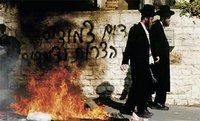
Ultra-Orthodox figures are calling on the police and the legal establishment to investigate unnatural deaths through non-invasive imaging rather than autopsies, which the ultra-Orthodox oppose - a position that has played a key role in clashes with the state for 40 years. The move comes as the largely ultra-Orthodox Zaka rescue and recovery organization is set to begin a campaign to portray autopsies as undermining human dignity.
The Zaka campaign, which is due to begin in the next few days and will include a petition, targets not only the Jewish population, but also Muslims, who typically oppose autopsies.
In the last few months, Zaka leaders, with the assistance of ultra-Orthodox MKs, have asked the Justice, Health and Public Security ministries to replace autopsies with MRI and CT scans. Armed with scientific research and legal precedents from Britain and Switzerland, along with an opinion by Israeli experts, Zaka argues that a virtual autopsy is faster and more accurate in determining the cause of death than the traditional kind.
"An invasive operation is something that there's no need for today," said Zaka head Yehuda Meshi Zahav. "The state must - and today, also can - take the families' feelings into account. Not only the ultra-Orthodox and the religious, but also secular people oppose autopsies for their loved ones. It adds a terrible sorrow to their grief."
The technology that makes virtual autopsies possible is not new. But it is only recently, after requests from Zaka, that the chief pathologist of the Institute of Forensic Medicine at Abu Kabir, Prof. Yehuda Hiss, revealed that he supports using MRIs and CTs at the institute. Indeed, Hiss is planning to spend a year in Britain and Switzerland to learn how to conduct virtual autopsies. Nonetheless, he said that while the use of imaging machines could minimize invasive procedures, it will not be able to completely replace them.
For instance, a report Hiss wrote on the issue indicates that the machines cannot replace a physical examination in a search for poison or tissue morbidity. Zaka, however, is demanding that an MRI machine be introduced into the forensic institute for immediate use, rather than waiting until Hiss returns from abroad. He plans to leave in the next few months.
Police statistics indicate that in the first five months of 2005, 334 autopsies were conducted in Israel. Of those, about 80 percent were conducted with the families' approval, and 20 percent were carried out by court order, despite the families' opposition.
The police are likely to support the use of imaging procedures in the investigation of some deaths, especially if it would prevent the occurrence of embarrassing incidents like the one in Ashdod three weeks ago, when the body of a baby girl from an ultra-Orthodox family was stolen from a cemetery under police officers' noses and buried before the autopsy could take place. Police investigators encounter similar cases on a regular basis. On Monday, for instance, a woman died suddenly in Elad and the ultra-Orthodox community leaders worked with Zaka to convince police officers not to conduct an autopsy - possibly averting another round of clashes. If the police had the option of determining the cause of death through the use of an MRI, Zaka says, the dilemma could be avoided.
That's why Zaka is working to purchase an MRI machine, whether through state or private funding, Meshi Zahav said. He said ultra-Orthodox in Israel and abroad have expressed interest in buying the machine. MK Ya'akov Litzman (United Torah Judaism) said he planned to discuss the issue with State Prosecutor Eran Shendar and Justice Minister Haim Ramon.
The Justice Ministry said Litzman's request was being transferred to professionals in the field, "after which we will consider our position."
The latest clashes over autopsies centered around the baby girl whose body was stolen from the Ashdod cemetery and outbreaks of violence in ultra-Orthodox neighborhoods in January, after the autopsy of a Kiryat Ata woman who was murdered. The conflict reached its height in the 1960s and '70s, when ultra-Orthodox groups organized mass protests, threatened the lives of pathologists and stole bodies from medical centers. The situation settled down after 1981, when an amendment to the Anatomy and Pathology Law was passed, minimizing pathologists' right to conduct autopsies.
Whereas before they would frequently conduct autopsies for research purposes, pathologists today must have reasonable cause to suspect foul play or to require an autopsy to determine the cause of death. If the family opposes an autopsy, the police can ask permission from the courts, which must hear the family's arguments.
By Yair Ettinger
Ultra-Orthodox figures are calling on the police and the legal establishment to investigate unnatural deaths through non-invasive imaging rather than autopsies, which the ultra-Orthodox oppose - a position that has played a key role in clashes with the state for 40 years. The move comes as the largely ultra-Orthodox Zaka rescue and recovery organization is set to begin a campaign to portray autopsies as undermining human dignity.
The Zaka campaign, which is due to begin in the next few days and will include a petition, targets not only the Jewish population, but also Muslims, who typically oppose autopsies.
In the last few months, Zaka leaders, with the assistance of ultra-Orthodox MKs, have asked the Justice, Health and Public Security ministries to replace autopsies with MRI and CT scans. Armed with scientific research and legal precedents from Britain and Switzerland, along with an opinion by Israeli experts, Zaka argues that a virtual autopsy is faster and more accurate in determining the cause of death than the traditional kind.
"An invasive operation is something that there's no need for today," said Zaka head Yehuda Meshi Zahav. "The state must - and today, also can - take the families' feelings into account. Not only the ultra-Orthodox and the religious, but also secular people oppose autopsies for their loved ones. It adds a terrible sorrow to their grief."
The technology that makes virtual autopsies possible is not new. But it is only recently, after requests from Zaka, that the chief pathologist of the Institute of Forensic Medicine at Abu Kabir, Prof. Yehuda Hiss, revealed that he supports using MRIs and CTs at the institute. Indeed, Hiss is planning to spend a year in Britain and Switzerland to learn how to conduct virtual autopsies. Nonetheless, he said that while the use of imaging machines could minimize invasive procedures, it will not be able to completely replace them.
For instance, a report Hiss wrote on the issue indicates that the machines cannot replace a physical examination in a search for poison or tissue morbidity. Zaka, however, is demanding that an MRI machine be introduced into the forensic institute for immediate use, rather than waiting until Hiss returns from abroad. He plans to leave in the next few months.
Police statistics indicate that in the first five months of 2005, 334 autopsies were conducted in Israel. Of those, about 80 percent were conducted with the families' approval, and 20 percent were carried out by court order, despite the families' opposition.
The police are likely to support the use of imaging procedures in the investigation of some deaths, especially if it would prevent the occurrence of embarrassing incidents like the one in Ashdod three weeks ago, when the body of a baby girl from an ultra-Orthodox family was stolen from a cemetery under police officers' noses and buried before the autopsy could take place. Police investigators encounter similar cases on a regular basis. On Monday, for instance, a woman died suddenly in Elad and the ultra-Orthodox community leaders worked with Zaka to convince police officers not to conduct an autopsy - possibly averting another round of clashes. If the police had the option of determining the cause of death through the use of an MRI, Zaka says, the dilemma could be avoided.
That's why Zaka is working to purchase an MRI machine, whether through state or private funding, Meshi Zahav said. He said ultra-Orthodox in Israel and abroad have expressed interest in buying the machine. MK Ya'akov Litzman (United Torah Judaism) said he planned to discuss the issue with State Prosecutor Eran Shendar and Justice Minister Haim Ramon.
The Justice Ministry said Litzman's request was being transferred to professionals in the field, "after which we will consider our position."
The latest clashes over autopsies centered around the baby girl whose body was stolen from the Ashdod cemetery and outbreaks of violence in ultra-Orthodox neighborhoods in January, after the autopsy of a Kiryat Ata woman who was murdered. The conflict reached its height in the 1960s and '70s, when ultra-Orthodox groups organized mass protests, threatened the lives of pathologists and stole bodies from medical centers. The situation settled down after 1981, when an amendment to the Anatomy and Pathology Law was passed, minimizing pathologists' right to conduct autopsies.
Whereas before they would frequently conduct autopsies for research purposes, pathologists today must have reasonable cause to suspect foul play or to require an autopsy to determine the cause of death. If the family opposes an autopsy, the police can ask permission from the courts, which must hear the family's arguments.

The Star of David joins finally the Red Cross
Not merely a symbolic correction
By Haaretz Editorial
The International Federation of Red Cross and Red Crescent Societies yesterday admitted Magen David Adom to the organization, ending a battle that began 60 years ago, even before the state was founded. The Star of David symbol will have to appear inside a diamond-shaped logo, but MDA will be a full and equal member of the body, without having to adopt the cross or crescent symbols used by the other 184 members of the global movement. Israel - under MDA's symbol - will join the Red Cross and Red Crescent in humanitarian activities such as treating the wounded and dealing with the dead on battlefields, visiting prison camps and helping with prisoner of war exchanges. Until now, MDA was unable to use its emblem, which was not universally recognized, without the approval of the host state.
The decision made by Red Cross in its Geneva headquarters yesterday is not only symbolic, but primarily political. It was made by majority vote, over the opposition of Arab and Muslim states, which objected to MDA joining the organization and to recognizing MDA's symbol as long as the occupation continues. Their position was completely rejected.
The turning point in the Red Cross' attitude toward MDA followed Israel's decision to withdraw from the Gaza Strip. Francois Bellon, the organization's chairman, promised during his visit to Israel in 2004 that he would use the withdrawal to advance Israel's request to join the Red Cross. He kept his promise. Together with the Swiss Foreign Ministry, and especially the Swiss embassy in Tel Aviv, he acted resolutely to obtain the required majority for the decision.
The demand by Israel and Jewish organizations that the Star of David be given a status equal to that of the cross and crescent met with more than political and religious objections. The Red Cross feared that other states would demand recognition of their symbols, whether national, political or religious. Seeking to prevent what they saw as a chain reaction, Red Cross officials tried to ward off the American-backed Israeli and Jewish pressure. They noted that the Sri Lanka organization's symbol is the swastika. How would you react, they asked, if Sri Lanka insisted on having its symbol recognized? But Israel insisted.
Ultimately, yesterday's decision is a compromise. It officially established the "red crystal" as the third recognized Red Cross symbol, but permits Israel, if it so decides - and it is the only one that has asked to do so - to put the Star of David into the crystal. To appease the Arab states, the Red Cross also decided to admit the Palestinian Red Crescent into the organization.
Being a full member of the Red Cross has its perks. MDA will be entitled to research and development grants, information exchanges and full participation in international conferences.
But the decision may also be seen as historic redress. In World War II, the Red Cross - like Switzerland, the country of its birth - suffered from moral failure. It turned a blind eye to the murder of Jews and at times even cooperated with the Nazis. By recognizing the Jewish state's symbol in this way, the organization corrects an ongoing injustice.
By Haaretz Editorial
The International Federation of Red Cross and Red Crescent Societies yesterday admitted Magen David Adom to the organization, ending a battle that began 60 years ago, even before the state was founded. The Star of David symbol will have to appear inside a diamond-shaped logo, but MDA will be a full and equal member of the body, without having to adopt the cross or crescent symbols used by the other 184 members of the global movement. Israel - under MDA's symbol - will join the Red Cross and Red Crescent in humanitarian activities such as treating the wounded and dealing with the dead on battlefields, visiting prison camps and helping with prisoner of war exchanges. Until now, MDA was unable to use its emblem, which was not universally recognized, without the approval of the host state.
The decision made by Red Cross in its Geneva headquarters yesterday is not only symbolic, but primarily political. It was made by majority vote, over the opposition of Arab and Muslim states, which objected to MDA joining the organization and to recognizing MDA's symbol as long as the occupation continues. Their position was completely rejected.
The turning point in the Red Cross' attitude toward MDA followed Israel's decision to withdraw from the Gaza Strip. Francois Bellon, the organization's chairman, promised during his visit to Israel in 2004 that he would use the withdrawal to advance Israel's request to join the Red Cross. He kept his promise. Together with the Swiss Foreign Ministry, and especially the Swiss embassy in Tel Aviv, he acted resolutely to obtain the required majority for the decision.
The demand by Israel and Jewish organizations that the Star of David be given a status equal to that of the cross and crescent met with more than political and religious objections. The Red Cross feared that other states would demand recognition of their symbols, whether national, political or religious. Seeking to prevent what they saw as a chain reaction, Red Cross officials tried to ward off the American-backed Israeli and Jewish pressure. They noted that the Sri Lanka organization's symbol is the swastika. How would you react, they asked, if Sri Lanka insisted on having its symbol recognized? But Israel insisted.
Ultimately, yesterday's decision is a compromise. It officially established the "red crystal" as the third recognized Red Cross symbol, but permits Israel, if it so decides - and it is the only one that has asked to do so - to put the Star of David into the crystal. To appease the Arab states, the Red Cross also decided to admit the Palestinian Red Crescent into the organization.
Being a full member of the Red Cross has its perks. MDA will be entitled to research and development grants, information exchanges and full participation in international conferences.
But the decision may also be seen as historic redress. In World War II, the Red Cross - like Switzerland, the country of its birth - suffered from moral failure. It turned a blind eye to the murder of Jews and at times even cooperated with the Nazis. By recognizing the Jewish state's symbol in this way, the organization corrects an ongoing injustice.
Thursday, June 22, 2006
Wednesday, June 21, 2006
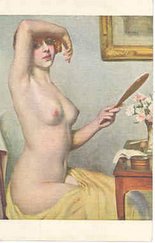

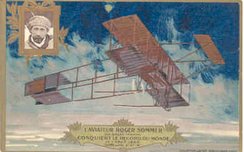
POZDRAV z RUMUNSKA
POZDRAV z RUMUNSKA
De la Edelina Sterling-Stoian
---------------------
[imaginati-va textul de mai jos citit pe muzica ceheasca veche, de
patefon, scirtiind si fisiind pe alocuri]
POZDRAV z RUMUNSKA!
Draga mamica!
Va dorim toate cele bune, tie si lu’ Mana. Aici ne merge chiar foarte bine, e foarte frumos. Avem casa mare, noi doua camere si Florica una, tot aici gatim. Avem 8 rate si totodata pui si gaini si mai cumparam gisca si porc si tot restul avem acasa, in camara. Cred ca aici o sa ramin mai mult decit in alte parti fiindca-mi place si e bine.
Ancea,
Prundul Birgaului.
[de pe o ilustrata trimisa in Cehia probabil de o slujnicuta venita sa lucreze la o familie din Romania, in vara anului 1925].
*
Intr-o seara de toamna pragheza m-am dus pentru un interview acasa la Dr. Jiri Felix, lingvist ceh, profesor la Universitatea Carolina si roma^nist de renume. La despartire mi-a daruit una din cartile sale, un volum informativ intitulat ‘Relatiile ceho-roma^ne in date’.
Sfirsitul cartii contine, reproduse, ilustrate vechi trimise in Cehia de cehi aflati in trecere sau in vizita in Romania...
Alaturi de cea din Prundul Birgaului - o alta, cea mai veche dintre ele, datata 1899. Se vad marea, in departare citeva cladiri, un ponton si textul:
Salutari din Constanta. Am ajuns cu bine, marea e putin agitata, plec seara la zece. Bohus.
Predeal, 1900
Pe fundalul muntilor - orasul labartat pe ecran lat.
Am trecut aici granita romaneasca. Salut! (opt semnaturi)
Radauti, 17.02.1916
Pe ilustrata sta scris in germana: ‘Gruss aus der Bukowina -Rumänische Typenbilder’ (‘Salut din Bucovina - Imagini de romani tipici’). Din seria ‘romani tipici’ face parte de data aceasta o taranca tinara, zimbitoare, in port national, cu doi copii mici in brate. Unul isi suge degetul, celalalt doarme. Pozeaza linga un gard din tarusi, in spate se vede o casa taraneasca, scunda.
Draga Marie!
Iti trimit o vedere cu mamica romana! Scrie-mi daca ati primit vederea din Stanislav si pe cea de ieri cu frumusetea rusa. Sa-mi trimiteti lucrurile despre care ti-am scris inainte, iar Jarda sa-mi trimita ochelarii. Am si eu ceva pentru el! Sa-mi scrieti, ca daca nu, nu mai scriu nimic. Deocamdata va saluta si va saruta
(semnatura indescifrabila)
Bucuresti - 1918
Ateneul vazut de sus, pe strada citeva mogildete, parca si o trasura.
Dragi parinti. Cu aceasta carte va salut din inima si va spun ca sint sanatos si o duc bine. V-as mai ruga sa-mi trimiteti vax de ghete cumparat de la Kozanka, aici e groaznic de scump! Skatulka 3K (nume, soldat, companie).
Gaesti - 27.9.1922
O strada neasfaltata. O caruta trasa de un cal e pe punctul sa iasa din ilustrata. O casa cu etaj. La parter o pravalie. Pe toata latimea cladirii, pe trotuar, marfa isi asteapta clientii. Doi barbati, unul in costum negru, celalalt intr-un caftan de aceeasi culoare, pozeaza tepeni la intrarea in pravalie.
Primiti toate salutarile mele din Romania! Am sosit in sfirsit astazi, la ora 9 dimineata. Aici e foarte frumos si orasul are in sfirsit un farmec curat balcanic. Mi-e bine aici! Cu salutari tuturor, Jiri
Bucuresti - 30.9.1922
Vedere din aer. Turnuri de biserici, un parc, inghesuite - acoperisurile caselor, gradini.
Va trimit tuturor salutari din Bucuresti. Orasul e foarte intins si are neobisnuit de multe cladiri frumoase. Aici isi au resedinta Regele si nobilimea, asa ca sint o multime de minunatii!
Al vostru, Jiri.
Cimpina, 19.7.1924
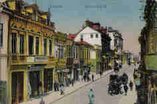
O strada. Pe partea dreapta o cladire mai inalta decit vecinele ei, pe care scrie POSTA. Alaturi o dugheana cu firma, apoi fatada cu coloane a altei cladiri. Pe trotuar, in fata unui gard scund al casei cu coloane - trei barbati stau de vorba linga un stilp de telegraf. Apoi o vila cu partea dinspre strada a acoperisului in forma de cupola. Trecem vizavi. Citiva pomi, o biserica. Un domn in costum de culoare inchisa, palarie alba. Pe linga el trec doua taranci cu broboade si fuste lungi.
Te salutam calduros din Romania. Ne gindim la tine, ce loc ar fi aici pentru un cirnatar bun, care sa lucreze ca la Praga, dar desigur ar trebui sa vorbeasca cel putin nemteste si bine. O ducem bine, numai mincam si bem. Salut-o pe Anezka si pe ala micu’ si pe Tonda. Unchiul si matusa.
Baile Herculane, 5.7.1925
Vile, o strada cu pomi pe margini, muntii.
Amintiri de la Baile Herculane va dedica J. Macurek.
Iasi, 1928
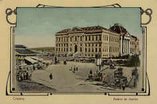
O cladire impunatoare, cu turnuri si turnulete, pe ilustrata sta scris: Iasi, Palatul Administrativ.
Salutari, Domnule si Doamna Consul! Aici traiesc ca-n povesti!
Al dumneavoastra,
staret Dr. Zavoral. Ne apropiem de Cernauti.
Bucuresti, 18.6.1931
Calea Victoriei. Soare, forfota, lume eleganta, mai multi barbati decit femei. Doi domni se saluta pe trotuar scotindu-si palariile. In mijlocul strazii - doua masini. Arata ca taxi-urile londoneze. E si una decapotabila. Cladiri inalte. Pe una din ele e o reclama uriasa pentru ceva care se numeste STELA. In prim plan, pe trotuar, o florareasa. O femeie in virsta, imbracata in negru sau alta culoare inchisa, cu basma pe cap. Tine in mina un buchet mare de flori cu care incearca sa atraga atentia trecatorilor.
Frate, ma aflu cu afaceri la Bucuresti, unde mai ramin cam pina pe 10-iulie-31. Imi cer iertare, rezolv dupa intoarcere. Cu salutari fratesti. (semnatura indescifrabila).
Carmen Sylva, 29.8.1935
Vedere de sus. Marea, plaja. Pe plaja - mogildete care par sa se limbe. In apa citeva barci si puzderie de puncte negre care se balacesc in mare, aproape de tarm.
Copii, dupa doua zile de calatorie obositoare am ajuns, in sfirsit, la Carmen Sylva. Nu vreau sa inventez laude, dar aici e ca in rai. Scaldatul in mare e minunat, nici nu se compara cu scaldatul in Adriatica, soarele straluceste la fel de minunat, numai mincarea nu e asa cum ne-am dorit-o. Poate o sa ne obisnuim…
(semnatura indescifrabila)
Constanta, 20.7.1937
Pe ilustrata, in partea de sus, stinga, sta scris: ‘Studiofotografic’, in dreapta: ‘PlajEa Mamaia’. In prim plan, sub umbrele mari de soare, stau la masa domni in costume de culoare deschisa,
palarii asortate. Un adolescent cu freza bine lustruita, camasa alba cu mineci suflecate. Cateva doamne cu palarii de soare, boruri largi cu buchetele de flori. In planul doi - plaja aglomerata. Dar nimeni nu sta lungit la soare, toata lumea se plimba pe nisip, doar citeva punctulete negre se zaresc imprastiate in apa marii.
Dragilor, astazi va scriem ultima oara, caci miine inchidem tabara, iar poimiine plecam. Ne bucuram mult ca mergem acasa, desi aici e cu adevarat minunat. Astazi am fost la Baile Carmen Sylva, unde sint multi cehi. Pe drumul de intoarcere ne oprim la Bucuresti unde, se pare, am facut o buna impresie celor care ne-au calauzit prin oras, la sosire.
Va saruta Mirka si Jarka.
Satu Mare, 15.1.1939
Probabil centrul orasului. O biserica, doua turnuri cu clopotnite, cladiri care par a fi oficiale, multa verdeata, in mijlocul ilustratei - o statuie pe un soclu masiv, alb.
Pozdrav z Rumunska! Salutari din Romania! Medo! Iti scriu mai multe dupa ce ma intorc acasa. Imi merge bine. Sint aici la balul ofiterilor. E minunat. Buna sara! Miki
Edelina Sterling-Stoian
De la Edelina Sterling-Stoian
---------------------
[imaginati-va textul de mai jos citit pe muzica ceheasca veche, de
patefon, scirtiind si fisiind pe alocuri]
POZDRAV z RUMUNSKA!
Draga mamica!
Va dorim toate cele bune, tie si lu’ Mana. Aici ne merge chiar foarte bine, e foarte frumos. Avem casa mare, noi doua camere si Florica una, tot aici gatim. Avem 8 rate si totodata pui si gaini si mai cumparam gisca si porc si tot restul avem acasa, in camara. Cred ca aici o sa ramin mai mult decit in alte parti fiindca-mi place si e bine.
Ancea,
Prundul Birgaului.
[de pe o ilustrata trimisa in Cehia probabil de o slujnicuta venita sa lucreze la o familie din Romania, in vara anului 1925].
*
Intr-o seara de toamna pragheza m-am dus pentru un interview acasa la Dr. Jiri Felix, lingvist ceh, profesor la Universitatea Carolina si roma^nist de renume. La despartire mi-a daruit una din cartile sale, un volum informativ intitulat ‘Relatiile ceho-roma^ne in date’.
Sfirsitul cartii contine, reproduse, ilustrate vechi trimise in Cehia de cehi aflati in trecere sau in vizita in Romania...
Alaturi de cea din Prundul Birgaului - o alta, cea mai veche dintre ele, datata 1899. Se vad marea, in departare citeva cladiri, un ponton si textul:
Salutari din Constanta. Am ajuns cu bine, marea e putin agitata, plec seara la zece. Bohus.
Predeal, 1900
Pe fundalul muntilor - orasul labartat pe ecran lat.
Am trecut aici granita romaneasca. Salut! (opt semnaturi)
Radauti, 17.02.1916
Pe ilustrata sta scris in germana: ‘Gruss aus der Bukowina -Rumänische Typenbilder’ (‘Salut din Bucovina - Imagini de romani tipici’). Din seria ‘romani tipici’ face parte de data aceasta o taranca tinara, zimbitoare, in port national, cu doi copii mici in brate. Unul isi suge degetul, celalalt doarme. Pozeaza linga un gard din tarusi, in spate se vede o casa taraneasca, scunda.
Draga Marie!
Iti trimit o vedere cu mamica romana! Scrie-mi daca ati primit vederea din Stanislav si pe cea de ieri cu frumusetea rusa. Sa-mi trimiteti lucrurile despre care ti-am scris inainte, iar Jarda sa-mi trimita ochelarii. Am si eu ceva pentru el! Sa-mi scrieti, ca daca nu, nu mai scriu nimic. Deocamdata va saluta si va saruta
(semnatura indescifrabila)
Bucuresti - 1918
Ateneul vazut de sus, pe strada citeva mogildete, parca si o trasura.
Dragi parinti. Cu aceasta carte va salut din inima si va spun ca sint sanatos si o duc bine. V-as mai ruga sa-mi trimiteti vax de ghete cumparat de la Kozanka, aici e groaznic de scump! Skatulka 3K (nume, soldat, companie).
Gaesti - 27.9.1922
O strada neasfaltata. O caruta trasa de un cal e pe punctul sa iasa din ilustrata. O casa cu etaj. La parter o pravalie. Pe toata latimea cladirii, pe trotuar, marfa isi asteapta clientii. Doi barbati, unul in costum negru, celalalt intr-un caftan de aceeasi culoare, pozeaza tepeni la intrarea in pravalie.
Primiti toate salutarile mele din Romania! Am sosit in sfirsit astazi, la ora 9 dimineata. Aici e foarte frumos si orasul are in sfirsit un farmec curat balcanic. Mi-e bine aici! Cu salutari tuturor, Jiri
Bucuresti - 30.9.1922
Vedere din aer. Turnuri de biserici, un parc, inghesuite - acoperisurile caselor, gradini.
Va trimit tuturor salutari din Bucuresti. Orasul e foarte intins si are neobisnuit de multe cladiri frumoase. Aici isi au resedinta Regele si nobilimea, asa ca sint o multime de minunatii!
Al vostru, Jiri.
Cimpina, 19.7.1924
O strada. Pe partea dreapta o cladire mai inalta decit vecinele ei, pe care scrie POSTA. Alaturi o dugheana cu firma, apoi fatada cu coloane a altei cladiri. Pe trotuar, in fata unui gard scund al casei cu coloane - trei barbati stau de vorba linga un stilp de telegraf. Apoi o vila cu partea dinspre strada a acoperisului in forma de cupola. Trecem vizavi. Citiva pomi, o biserica. Un domn in costum de culoare inchisa, palarie alba. Pe linga el trec doua taranci cu broboade si fuste lungi.
Te salutam calduros din Romania. Ne gindim la tine, ce loc ar fi aici pentru un cirnatar bun, care sa lucreze ca la Praga, dar desigur ar trebui sa vorbeasca cel putin nemteste si bine. O ducem bine, numai mincam si bem. Salut-o pe Anezka si pe ala micu’ si pe Tonda. Unchiul si matusa.
Baile Herculane, 5.7.1925
Vile, o strada cu pomi pe margini, muntii.
Amintiri de la Baile Herculane va dedica J. Macurek.
Iasi, 1928
O cladire impunatoare, cu turnuri si turnulete, pe ilustrata sta scris: Iasi, Palatul Administrativ.
Salutari, Domnule si Doamna Consul! Aici traiesc ca-n povesti!
Al dumneavoastra,
staret Dr. Zavoral. Ne apropiem de Cernauti.
Bucuresti, 18.6.1931
Calea Victoriei. Soare, forfota, lume eleganta, mai multi barbati decit femei. Doi domni se saluta pe trotuar scotindu-si palariile. In mijlocul strazii - doua masini. Arata ca taxi-urile londoneze. E si una decapotabila. Cladiri inalte. Pe una din ele e o reclama uriasa pentru ceva care se numeste STELA. In prim plan, pe trotuar, o florareasa. O femeie in virsta, imbracata in negru sau alta culoare inchisa, cu basma pe cap. Tine in mina un buchet mare de flori cu care incearca sa atraga atentia trecatorilor.
Frate, ma aflu cu afaceri la Bucuresti, unde mai ramin cam pina pe 10-iulie-31. Imi cer iertare, rezolv dupa intoarcere. Cu salutari fratesti. (semnatura indescifrabila).
Carmen Sylva, 29.8.1935
Vedere de sus. Marea, plaja. Pe plaja - mogildete care par sa se limbe. In apa citeva barci si puzderie de puncte negre care se balacesc in mare, aproape de tarm.
Copii, dupa doua zile de calatorie obositoare am ajuns, in sfirsit, la Carmen Sylva. Nu vreau sa inventez laude, dar aici e ca in rai. Scaldatul in mare e minunat, nici nu se compara cu scaldatul in Adriatica, soarele straluceste la fel de minunat, numai mincarea nu e asa cum ne-am dorit-o. Poate o sa ne obisnuim…
(semnatura indescifrabila)
Constanta, 20.7.1937
Pe ilustrata, in partea de sus, stinga, sta scris: ‘Studiofotografic’, in dreapta: ‘PlajEa Mamaia’. In prim plan, sub umbrele mari de soare, stau la masa domni in costume de culoare deschisa,
palarii asortate. Un adolescent cu freza bine lustruita, camasa alba cu mineci suflecate. Cateva doamne cu palarii de soare, boruri largi cu buchetele de flori. In planul doi - plaja aglomerata. Dar nimeni nu sta lungit la soare, toata lumea se plimba pe nisip, doar citeva punctulete negre se zaresc imprastiate in apa marii.
Dragilor, astazi va scriem ultima oara, caci miine inchidem tabara, iar poimiine plecam. Ne bucuram mult ca mergem acasa, desi aici e cu adevarat minunat. Astazi am fost la Baile Carmen Sylva, unde sint multi cehi. Pe drumul de intoarcere ne oprim la Bucuresti unde, se pare, am facut o buna impresie celor care ne-au calauzit prin oras, la sosire.
Va saruta Mirka si Jarka.
Satu Mare, 15.1.1939
Probabil centrul orasului. O biserica, doua turnuri cu clopotnite, cladiri care par a fi oficiale, multa verdeata, in mijlocul ilustratei - o statuie pe un soclu masiv, alb.
Pozdrav z Rumunska! Salutari din Romania! Medo! Iti scriu mai multe dupa ce ma intorc acasa. Imi merge bine. Sint aici la balul ofiterilor. E minunat. Buna sara! Miki
Edelina Sterling-Stoian
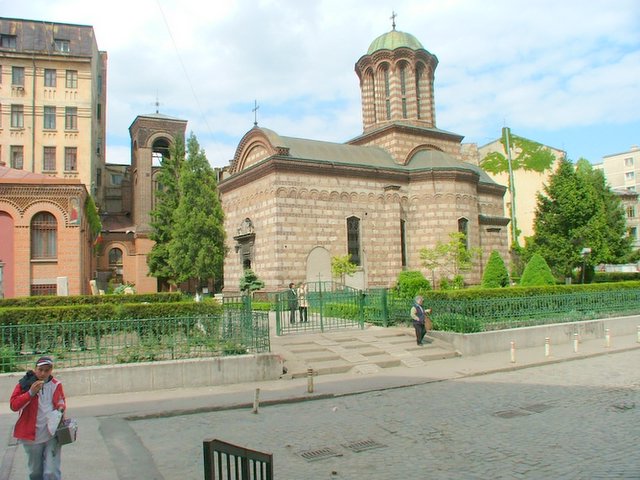
Matei Calinescu, Ion Vianu si Lucian D.Cismigiu pe urmele Crailor in Bucurestiul de azi.
Dialog la Bucuresti, 1-13 iunie 2006
1.L.D-C.
Ne-am regasit aici in Bucuresti, voi doi reveniti dinspre vest iar eu dinspre sud, de fapt voi de la apus si eu metaforic vorbind,dinspre soare-rasare. Ne-am regasit in orasul tineretii noastre. Eu il percep acelasi si diferit, distanta impreuna cu revenirea mi-au dat si avantajul perspectivei spatio-temporale si strangerea de inima la revenirea intr-un loc bantuit de fantomele celor dragi care nu mai sunt.
Am revenit in acest loc, pe care tu Matei l-ai numit genial ( in re-citirea Crailor) Balcania, locul care aflat in perpetua disparitie, nu moare niciodata… Si l-am gasit aici, clonat si la putere, pe “transcendentalul” Pirgu, mai agitat si activ ca niciodata, pregatind intrarea Balcaniei in Europa. Si ma gandeam sa facem impreuna o calatorie prin spatiul orasului nostru, unde Pirgu ne serveste drept “Virgiliu” si interlocutor, tinand haturile trasurii sale, cel putin un BMW 4x4.
Printr-un oras devenit ostil locuitorilor lui…..
I.V. E nevoie de multa imaginaţie pentru a reconstitui vechiul Bucuresti! Şi a devenit aproape un loc comun să spunem că oraşul nostru este un oraş martirizat. Ceeace e remarcabil e că au concurat tot felul de cauze la supliciul oraşului nostru, în lungul veacurilor: cutremure , incendii, inundaţii dar şi invazii, bombardamente… puţine oraşe mari în Europa au avut parte chiar de atâtea catastrofe. Cu atât mai preţios e ceeace rămâne. Dar şi paginile care-i sunt consacrate, care, uneori, vorbesc imaginaţiei mai mult decât pietrele.
M.C. Ma bucur ca ne-am regasit din nou, eu de la o vreme revin aproape anual în Bucureşti, cu imagini vechi peste care se suprapun – dar fara sa le ştearga – altele noi, amestecate, adeseori urîte, strazi murdare, automobile parcate pe trotuare, case noi arhitectural stridente (cu prea rare excepţii), case vechi frumoase parasite, ruine triste, fara patina, şi altele, nu multe, remodelate, cu elaboratele lor detalii de sfîrşit de secol 19 sau inceput de secol 20. Una din acestea, de pe Maria Rosetti, are pe faţada laterala în raport cu strada, un mare şi enigmatic inorog.. Anul acesta locuiesc într-un apartament din ceea ce a fost « mahalaua armeneasca », situat pe strada Logofat Luca Stroici, care în trecut se numea Robert de Flers (edililor comunişti le placea sa schimbe numele strazilor cu rezonaţe « cosmoplite »), şi pe care se gaseşte o casa veche boiereasca, înca aratoasa, cu o placa indicînd ca acolo a locuit, în ultimii sai ani, marele Matei, adica Mateiu I. Caragiale, al carui portret în relief de bronz înnegrit de vreme ar trebui curaţat, împrospatat. Faptul ca stau pe aceasta strada e doar una din multele coincidenţe sub zodia carora intru de cîte ori revin în oraşul natal. Cu trei ani în urma am publicat o carte despre Mateiu I. Caragiale – o carte de recitiri – pe care ma bucur ca o apreciezi, draga Lou. Ma plimb pe strazile din aceasta « mahala » recitind mental scrierile marelui meu omonim. Pe strada Spatarului, de care ma leaga amintiri lirice (locuia acolo scumpul meu prieten Mircea Ivanescu, poetul, Poetul), am trecut pe lînga casa Melic, una din cele mai vechi din Bucureşti, construita în 1822, în care a locuit la un moment dat pictorul Theodor Pallady şi care gazduieşte azi muzeul Pallady. Pe vremea cînd Mateiu Caragiale era tînar şi coresponda cu prietenul sau N. Boicescu – o minunata corespondenţa, vie, total neconformista, sincera cu un fel de naivitate în pozele laudaros cinice pe care le adopta Mateiu - el vizita chiar aceasta casa în speranţa ca ar putea-o seduce pe batrîna « gonzessa » care o ocupa. N-a reuşit : îi comunica lui Boicescu ca facuse tot ce trebuia, ca pîna şi o casta fecioara i-ar fi cedat daca s-ar fi aflat în locul babei ! Pe alta strada din « mahalaua armeneasca », şi anume pe strada Franzelarilor, prin anii 1960 am vazut, într-o noapte, un înger, lînga un copac foarte bAtrîn – un copac poate care, spre bucuria mea, mai existA.
L. D-C. Ingerul sau copacul ? Mare bucurie sa reinatalnesti acesti prieteni vechi, copacii. Sa fi fericit surprins, revenind in Bucuresti, ca mai sunt, unul sau altul cu care te-ai cunoscut in urma cu jumatate de secol… Si in gradina in care as putea spune ca m-am nascut, gradina Cismigiu, privesc in fiecare dimineata plopul pe langa care am crescut si care sta in picioare, in pozitie de « drepti »,un strajer personal. Putin mai departe, dincolo de plop, un alt strajer, strajerul « Podului Mare », un platan urias care e asezat acolo de pe vremea cand « s-a pus de o gradina », parca sa soarba « balta lui Dura negutatorul ». Si evident, Podul Mare, podul pe care Craiul povestitor il cunoaste pe Pantazi, pod pe care-l treceam in fiecare dimineata in drumul meu spre liceul Lazar. In acel an al crailor, 1910-1911, « Cismegiul de atunci,(era)singuratic si lasat in salbaticie ». Pe potecile gradinii fermecate pasesc si eroii tai, Ionel, si Cismigiul este pentru noi un fel de garantie. Case, strazi si cati oameni n-au disparut, Cismigiul este aici, strajer de Bucuresti. Casa lui Pantazi era pe o strada care se pare ca a disparut, strada Modei, unde e astazi -dupa Barbu Cioculescu- Hotelul Bucuresi, si daca e asa, acolo unde a fost cofetaria Nestor…, intre strada Luterana si Calea Victoriei. La o aruncatura de bat de Cismigiu. Dar, Ioane, pe unde era Cafeneaua « Cazes », cafeneaua careia amicul Gorica Pirgu ii fusese « Veniamin » ?
I.V. Nu disper în a identifica locul! Există mari specialişti în geografia vechiului Bucureşti. Ar trebui să spun "arheologi", dar nu totdeauna acest cuvânt are o deplină acoperire. Findcă uneori e adevărat că ruinele Bucureştilor mateini se găsesc sub pământ, ca urmele Antichităţii. Alteori însă sunt în aer. Dat fiind că Dealul Spirii, de exemplu, a fost ras ar trebuie căutate casele de acolo undeva deasupra solului de azi! Oricum ar fi, eu deosebesc mai multe straturi mateine: Bucureştii Sultanei Negoianu şi ai copilăriei lui Pantazi pe la Podul de Pământ (Calea Plevnei de azi), un oraş idilic înecat în copaci şi în flori, oraş totuşi; oraşul mişcat de agitaţia militară a războiului de independenţă, marcat de marea şi tragica iubire dintre modesta neguţătoreasă Pena şi nepotul Ţarului, Leuchtenberg-Beauharnais; oraşul, deja complet modificat, modernizat al momentului când se petrece acţiunea "Crailor": 1911-12. Şi momentul când "Craii" sunt scrişi, după primul război mondial, în care oraşul anterior apare deja ca un illo tempore, un trecut iremediabil îngropat.
La acestea eu aş mai adăuga două alte momente: Bucureştii anilor cincizeci, când, adolescenţi, descopeream "Cartea Crailor" (Ion Barbu); de pe atunci, traseele chefurilor nocturne ale celor patru nu mai puteau fi deduse decât cu mare aproximaţie, trecând în legendă, ca urmele lui Ulisse în periplul mediteranian (nu ştim unde e Ithaca eroului homeric!); în fine, Bucureştii de azi când recitesc "Craii" identificând din ce în ce mai greu nu numai cetatea lor dar şi pe ai mei, al vremii descoperirii de către mine a "Crailor".
M.C. Fosta stradA Robert de Flers (numita pentru un dramaturg care in 1921 a devenit unul din cei 40 de « nemuritori » ai Academiei franceze, dar care între timp a fost uitat, cum sunt, cu puţine excepţii, vai, mai toţi « nemuritorii »), strada pe care a locuit marele Mateiu e paralela la est cu strada ArmeneascA şi la vest, la douA-trei strazi distanţa, cu Sfîntul Spiridon şi apoi cu strada tatalui, I.L. Caragiale, care a locuit temporar pe ea, într-o casa veche destul de oarecare, între 1901-1902, deci înainte de a se autoexila la Berlin. (Ca Mateiu va fi cunoscut aceasta casa e neîndoielnic.) In apropierea ei, pe strada perpendiculara, poate fi vazuta o statuie în bronz, într-un mic parc dreptunghiular cu doua banci şi cîteva tufişuri prafuite copaci de pe Maria Rosetti: capul e desigur al lui I.L. Caragiale, dar trupul, în redingota, cu mîna dreapta încleştata pe rever, se zvoneşte ca ar fi fost conceput iniţial pentru o statuie a lui Lenin, cîndva prin anii 1950. Sculptorul, se zice, ar fi schimbat capul pentru a raspunde unei comenzi urgente, leagate de o aniversare a marelui dramaturg, iar capul lui Lenin ar fi putut fi folosit pentru o comanda care mai putea aştepta. Fie ea apocrifa, povestea conţine un graunte de adevar posibil. Un alt hibrid statuar bucureştean, mai celebru, e statuia equestra a Ioanei d’Arc din piaţa universitaţii, pe trupul împlatoşat eroic al careia artistul francez angajat sa-l reprezinte pe Mihai Viteazul a lipit capul domnitorului. Poate ca artistul francez (al carui nume îmi scapa) împartaşea opinia lui Poincaré care constituie motto-ul Crailor de Curtea Veche : « Nous sommes ici aux portes de l’orient où tout est pris à la légère ».
Dincolo de astfel de anecdote pitoreşti, Bucureştiul de azi e mai mult decît oricînd oraşul lui Pirgu. Prin dinamismul lui, prin vulgaritatea lui « data-n Paşte », prin atmosfera de corupţie, cinism şi impunitate care-l înfaşoara, prin spritul proxenetismului eliberat de pseudo-puritanismul rigid al deceniilor comuniste, Bucureştiul ar putea fi descris ca o improbabila versiune urbanistica a lui Gorica, un Pirgu ospitalier pentru diverse comisii europene venite cu pantahuza, un Pirgu care a renunţat sa-şi mai cumpere un castel istoric în Ardeal, preferînd sa-l reproduca în exemplare multiple şi nou-nouţe, mai aproape de inima oraşului sau paradigmatic, la Baneasa sau la Pipera. În locul vechilor Arnoteni, el prezideaza acum simbolic asupra sutelor de cazinouri fara pretenţii de genealogii ilustre în decadere, devenite maşini « moderne », de o mare eficacitate în spalatul banilor. Schimbarea esenţiala e ca Pirgu nu mai vorbeşte franţuzeşte şi nu-l mai admira pe Montaigne pentru « parţile lui » ci a învaţat englezeşte şi-şi « implementeaza » fara ruşine nabadaile.
L.D-C. Asa e, Bucurestiul este orasul lui Pirgu. Mai rau, Pirgu, eroul "transcedental" dupa cum il caracterizezi tu, draga Matei, s-a colorat mai intai in verde, apoi in rosu, si acum am impresia ca , pe nesimtite, combina culorile. Si s-a clonat, domnule! Bucurestiul este azi un oras ostil locuitorilor . Trotoarele sunt ocupate de masini, Pirgu si-a cumparat o trasura de lux, 4x4, cu care trece nepasator peste craterele de diverse dimensiuni din asfalt, el si gasca lui isi "trag" case care urla :Eu,Eu,Eu!, iar pentru prostime tramvaie , din cand in cand, pe linii ocupate si blocate.
Pe la 1911 Banca Nationala, Posta, "City"-ul Bucurestiului se ridicase, pe fatadele lui tencuiala nu se uscase bine. Era marturia directiei spre care vointa regala indrepta Bucurestiul, spre vest, spre Paris…"Micul Paris". Lipit de centrul nou, traia si prospera mai departe orasul orientat spre Istambul, cartierul de botez al crailor,strada Covaci, Curtea Veche. Bucurestiul ar fi putut deveni un oras de mare interes european, daca tocmai aceasta tensiune dintre Paris si Istambul ar fi fost recunoscuta si exploatata dibaci de edili si arhitecti. Pumnul de fier comunist a zdrobit cu cinism aceste traditii sau vocatii , firave poate, dar conturate clar. Si dezmatul urbanist si arhitectural post comunist isi face de cap, fara mila. Gorica si ciracii invart "euroii". Un oras pentru gasca, alt oras pentru prostime. Cand Gorica se grabeste, trasura 4x4 nu-l mai ajuta. Are nevoie de elicopter. Bucurestiul are azi cam 240 de kilometrii patrati, cam de trei ori mai intins decat Parisul… Si se intinde nestavilit mai departe, atinge Snagovul la nord! Mananca campiile, padurile, inghite salba de lacuri. La revolutie tricolorul afisa mandru o gaura. Parca ar fi mai potrivit tricolorul sa aiba la mijloc o hartie de 500 euroi.
I.V: Aş dori să reamintesc ce scria Ion Barbu, la apariţia "Crailor de Curtea Veche": Niciodată piatra nu va mai da Bucureştilor un sfert din strălucirea marilor cetăţi din Apus. Civilizaţia noastră e sortită să se petreacă în virtual şi interior. Neputând clădi în afară (e şi prea târziu şi zadarnic pentru aceasta) în inimile noastre se cade să întemeiem: turnuri vibrătoare, speranţei, aurite bolţi, laudei; clopotniţe, adâncimi soarelui netemporal. Pasajul nu trebuie înţeles numai negativ. Oraşul nostru, cred eu, nu mai poate concura la strălucirea exterioară cu alte cetăţi ale Europei. Ar trebui să devină, în primul rând, un oraş plăcut, un oraş în care să te simţi bine să trăieşti. Şi în formula asta intră şi respectul pentru trecut, putinţa de-a urmări, măcar cu mintea dar şi cu pasul, preumblarea Crailor. Resturile care provin din vechime sunt infime, dar cu atât mai preţioase. Acum câţiva ani am descoperit cu încântare că "birtul din Covaci", locul mitic al oricărui matein, acolo unde se deschide "cartea Crailor", cu scena cinei celebre -- Paşadia devorând din priviri pe Raşelica Nachmanson -- există (sau putem să ne imaginăm că există). Ce folos că întregul cartier, cel al "centrului istoric" se degradează pe zi ce trece şi asta în ciuda gesticulaţiilor de restauraţie de acum câţiva ani? Din nefericire nu e politica care pare azi să aibă prioritate. Chiar pentru a ne trăi trecutul "în virtual şi interior" avem nevoie de câteva umile urme materiale. Dar, în materie de distrugere, e preponderent proverbul: N-ADUCE ANUL CE ADUCE CEASUL. Bucureştii, oraşul martir, oraşul schinguit pare să-şi urmeze destinul. Vândut pe nimic urmaşilor lui Pirgu.
M.C.:Trebuie sa ne resemnam aşadar sa distingem între Bucureşti ca o stare de spirit – subiectiva şi idealizanta, facuta din amintiri, inclusiv amintiri de lectura, nu lipsita de ambiguitaţi şi ambivalenţe – şi oraşul real de astazi, care tocmai prin urîţenia lui devine un necesar principiu de tensiune, un suport improbabil tocmai al starii de spirit de care vorbeam. Aşa se explica poate tentaţia pe care o simt din cînd în cînd de a ma stabili la Bucureşti, sau de a petrece aici o buna parte a anului. Rezist la orice în afara de tentaţie, spunea Oscar Wilde. Din fericire, tentaţia bucureşteana e pentru mine intermitenta: voi reveni şi voi pleca mereu, poate mai rar decît tine, Lou. Sejururile tale bucureştene, draga Ion, sunt mai prelungite şi mai previzibile, pentru ca tu ai norocul de a locui în casa în care ai copilarit şi ţi-ai petrecut viaţa de dinainte de exil, frumoasa casa a părinţilor tăi, situata într-una din puţinele insule de verdeaţa şi de pace din acest oraş agitat, zgomotos şi convulsiv, pe strada cu mulţi tei acum înfloriţi, Andrei Mureşanu. Daca mi-ar fi şi mie accesibil casa copilariei, cine ştie? Oricum, nu trebuie sa uitam ca, pentru oameni ca noi, care-l parasisem definitiv, simplul fapt ca ne putem întoarce cînd vrem în oraşul nostru natal e masura unei schimbari radicale în bine. Cît despre Pirgu, care va haladui în aceste spaţii (sa nu ne iluzionam) pîna la sfîrşitul lumii, nu ne ramîne de facut decît sa luam exemplul Crailor, macar în aceasta privinţa: sa-l privim cu amuzament, sa rîdem de el, sa-l vedem ca pe un soitar sau mascarici fara astîmpar şi – de ce nu? – sa-i admiram neruşinata, exploziva, grotesca vitalitate de bufon abject şi perpetuu, fie el în fapt un rege neîncoronat, sau doar un rege de carnaval, într-un dezmaţat carnaval fara sfîrşit...
I.V : Să nu uităm că viaţa lui Paşadia avea puncte obscure... "fuseseră ani întregi când se dase afund, nu-l mai zărise nimeni". Şi: "Destul de des, Paşadia spunea că pleacă pentru câteva zile la munte ..." Se deda Paşadia unor orgii monstruoase sau, aşa cum se credeau alţii, cădea pradă unor "groaznice pandalii"? – Răspunsul nu poate fi cunoscut. Să reţinem totuşi, că oricum şi în orice împrejurări, calitatea de bucureştean implică un temporar refugiu "la munte". Şi că, mai mult sau mai puţin curarisit, bucureşteanul e cel ce mereu se întoarce.
L.D-C.: As rade de Pirgu cum razi de o maimuta, as admira vitalitatea exploziva, cum admir un tigru, atat tigrul cat si maimuta sunt tinute dupa gratii la gradina zoologica! Sa ne retragem oare in spatiul virtual al „Bucurestiului de Sus”? Si odata refugiati in lumea umbrelor, amintirilor, regretelor dulci amare, sa apara pe fata noastra zambetul si „duiosia extatica’ a Penei Corcodusa, la intalnirea din cer cu printul inimii ei? Sau sa luam iarasi si iarasi impreuna cu Pantazi trenul ce ne trece granita spre alte meleaguri care ne incarca cu energiile necesare reintoarcerii? Matei, Ion, zic intre timp, pana ne hotaram, sa ne asezam pe o terasa in Bucurestiul nostru, sa deschidem o sticla de vin, sa ne bucuram de tineretea care defileaza prin fata noastra si sa privim cu ochii nostri ramasi si ei la fel de tineri.
1.L.D-C.
Ne-am regasit aici in Bucuresti, voi doi reveniti dinspre vest iar eu dinspre sud, de fapt voi de la apus si eu metaforic vorbind,dinspre soare-rasare. Ne-am regasit in orasul tineretii noastre. Eu il percep acelasi si diferit, distanta impreuna cu revenirea mi-au dat si avantajul perspectivei spatio-temporale si strangerea de inima la revenirea intr-un loc bantuit de fantomele celor dragi care nu mai sunt.
Am revenit in acest loc, pe care tu Matei l-ai numit genial ( in re-citirea Crailor) Balcania, locul care aflat in perpetua disparitie, nu moare niciodata… Si l-am gasit aici, clonat si la putere, pe “transcendentalul” Pirgu, mai agitat si activ ca niciodata, pregatind intrarea Balcaniei in Europa. Si ma gandeam sa facem impreuna o calatorie prin spatiul orasului nostru, unde Pirgu ne serveste drept “Virgiliu” si interlocutor, tinand haturile trasurii sale, cel putin un BMW 4x4.
Printr-un oras devenit ostil locuitorilor lui…..
I.V. E nevoie de multa imaginaţie pentru a reconstitui vechiul Bucuresti! Şi a devenit aproape un loc comun să spunem că oraşul nostru este un oraş martirizat. Ceeace e remarcabil e că au concurat tot felul de cauze la supliciul oraşului nostru, în lungul veacurilor: cutremure , incendii, inundaţii dar şi invazii, bombardamente… puţine oraşe mari în Europa au avut parte chiar de atâtea catastrofe. Cu atât mai preţios e ceeace rămâne. Dar şi paginile care-i sunt consacrate, care, uneori, vorbesc imaginaţiei mai mult decât pietrele.
M.C. Ma bucur ca ne-am regasit din nou, eu de la o vreme revin aproape anual în Bucureşti, cu imagini vechi peste care se suprapun – dar fara sa le ştearga – altele noi, amestecate, adeseori urîte, strazi murdare, automobile parcate pe trotuare, case noi arhitectural stridente (cu prea rare excepţii), case vechi frumoase parasite, ruine triste, fara patina, şi altele, nu multe, remodelate, cu elaboratele lor detalii de sfîrşit de secol 19 sau inceput de secol 20. Una din acestea, de pe Maria Rosetti, are pe faţada laterala în raport cu strada, un mare şi enigmatic inorog.. Anul acesta locuiesc într-un apartament din ceea ce a fost « mahalaua armeneasca », situat pe strada Logofat Luca Stroici, care în trecut se numea Robert de Flers (edililor comunişti le placea sa schimbe numele strazilor cu rezonaţe « cosmoplite »), şi pe care se gaseşte o casa veche boiereasca, înca aratoasa, cu o placa indicînd ca acolo a locuit, în ultimii sai ani, marele Matei, adica Mateiu I. Caragiale, al carui portret în relief de bronz înnegrit de vreme ar trebui curaţat, împrospatat. Faptul ca stau pe aceasta strada e doar una din multele coincidenţe sub zodia carora intru de cîte ori revin în oraşul natal. Cu trei ani în urma am publicat o carte despre Mateiu I. Caragiale – o carte de recitiri – pe care ma bucur ca o apreciezi, draga Lou. Ma plimb pe strazile din aceasta « mahala » recitind mental scrierile marelui meu omonim. Pe strada Spatarului, de care ma leaga amintiri lirice (locuia acolo scumpul meu prieten Mircea Ivanescu, poetul, Poetul), am trecut pe lînga casa Melic, una din cele mai vechi din Bucureşti, construita în 1822, în care a locuit la un moment dat pictorul Theodor Pallady şi care gazduieşte azi muzeul Pallady. Pe vremea cînd Mateiu Caragiale era tînar şi coresponda cu prietenul sau N. Boicescu – o minunata corespondenţa, vie, total neconformista, sincera cu un fel de naivitate în pozele laudaros cinice pe care le adopta Mateiu - el vizita chiar aceasta casa în speranţa ca ar putea-o seduce pe batrîna « gonzessa » care o ocupa. N-a reuşit : îi comunica lui Boicescu ca facuse tot ce trebuia, ca pîna şi o casta fecioara i-ar fi cedat daca s-ar fi aflat în locul babei ! Pe alta strada din « mahalaua armeneasca », şi anume pe strada Franzelarilor, prin anii 1960 am vazut, într-o noapte, un înger, lînga un copac foarte bAtrîn – un copac poate care, spre bucuria mea, mai existA.
L. D-C. Ingerul sau copacul ? Mare bucurie sa reinatalnesti acesti prieteni vechi, copacii. Sa fi fericit surprins, revenind in Bucuresti, ca mai sunt, unul sau altul cu care te-ai cunoscut in urma cu jumatate de secol… Si in gradina in care as putea spune ca m-am nascut, gradina Cismigiu, privesc in fiecare dimineata plopul pe langa care am crescut si care sta in picioare, in pozitie de « drepti »,un strajer personal. Putin mai departe, dincolo de plop, un alt strajer, strajerul « Podului Mare », un platan urias care e asezat acolo de pe vremea cand « s-a pus de o gradina », parca sa soarba « balta lui Dura negutatorul ». Si evident, Podul Mare, podul pe care Craiul povestitor il cunoaste pe Pantazi, pod pe care-l treceam in fiecare dimineata in drumul meu spre liceul Lazar. In acel an al crailor, 1910-1911, « Cismegiul de atunci,(era)singuratic si lasat in salbaticie ». Pe potecile gradinii fermecate pasesc si eroii tai, Ionel, si Cismigiul este pentru noi un fel de garantie. Case, strazi si cati oameni n-au disparut, Cismigiul este aici, strajer de Bucuresti. Casa lui Pantazi era pe o strada care se pare ca a disparut, strada Modei, unde e astazi -dupa Barbu Cioculescu- Hotelul Bucuresi, si daca e asa, acolo unde a fost cofetaria Nestor…, intre strada Luterana si Calea Victoriei. La o aruncatura de bat de Cismigiu. Dar, Ioane, pe unde era Cafeneaua « Cazes », cafeneaua careia amicul Gorica Pirgu ii fusese « Veniamin » ?
I.V. Nu disper în a identifica locul! Există mari specialişti în geografia vechiului Bucureşti. Ar trebui să spun "arheologi", dar nu totdeauna acest cuvânt are o deplină acoperire. Findcă uneori e adevărat că ruinele Bucureştilor mateini se găsesc sub pământ, ca urmele Antichităţii. Alteori însă sunt în aer. Dat fiind că Dealul Spirii, de exemplu, a fost ras ar trebuie căutate casele de acolo undeva deasupra solului de azi! Oricum ar fi, eu deosebesc mai multe straturi mateine: Bucureştii Sultanei Negoianu şi ai copilăriei lui Pantazi pe la Podul de Pământ (Calea Plevnei de azi), un oraş idilic înecat în copaci şi în flori, oraş totuşi; oraşul mişcat de agitaţia militară a războiului de independenţă, marcat de marea şi tragica iubire dintre modesta neguţătoreasă Pena şi nepotul Ţarului, Leuchtenberg-Beauharnais; oraşul, deja complet modificat, modernizat al momentului când se petrece acţiunea "Crailor": 1911-12. Şi momentul când "Craii" sunt scrişi, după primul război mondial, în care oraşul anterior apare deja ca un illo tempore, un trecut iremediabil îngropat.
La acestea eu aş mai adăuga două alte momente: Bucureştii anilor cincizeci, când, adolescenţi, descopeream "Cartea Crailor" (Ion Barbu); de pe atunci, traseele chefurilor nocturne ale celor patru nu mai puteau fi deduse decât cu mare aproximaţie, trecând în legendă, ca urmele lui Ulisse în periplul mediteranian (nu ştim unde e Ithaca eroului homeric!); în fine, Bucureştii de azi când recitesc "Craii" identificând din ce în ce mai greu nu numai cetatea lor dar şi pe ai mei, al vremii descoperirii de către mine a "Crailor".
M.C. Fosta stradA Robert de Flers (numita pentru un dramaturg care in 1921 a devenit unul din cei 40 de « nemuritori » ai Academiei franceze, dar care între timp a fost uitat, cum sunt, cu puţine excepţii, vai, mai toţi « nemuritorii »), strada pe care a locuit marele Mateiu e paralela la est cu strada ArmeneascA şi la vest, la douA-trei strazi distanţa, cu Sfîntul Spiridon şi apoi cu strada tatalui, I.L. Caragiale, care a locuit temporar pe ea, într-o casa veche destul de oarecare, între 1901-1902, deci înainte de a se autoexila la Berlin. (Ca Mateiu va fi cunoscut aceasta casa e neîndoielnic.) In apropierea ei, pe strada perpendiculara, poate fi vazuta o statuie în bronz, într-un mic parc dreptunghiular cu doua banci şi cîteva tufişuri prafuite copaci de pe Maria Rosetti: capul e desigur al lui I.L. Caragiale, dar trupul, în redingota, cu mîna dreapta încleştata pe rever, se zvoneşte ca ar fi fost conceput iniţial pentru o statuie a lui Lenin, cîndva prin anii 1950. Sculptorul, se zice, ar fi schimbat capul pentru a raspunde unei comenzi urgente, leagate de o aniversare a marelui dramaturg, iar capul lui Lenin ar fi putut fi folosit pentru o comanda care mai putea aştepta. Fie ea apocrifa, povestea conţine un graunte de adevar posibil. Un alt hibrid statuar bucureştean, mai celebru, e statuia equestra a Ioanei d’Arc din piaţa universitaţii, pe trupul împlatoşat eroic al careia artistul francez angajat sa-l reprezinte pe Mihai Viteazul a lipit capul domnitorului. Poate ca artistul francez (al carui nume îmi scapa) împartaşea opinia lui Poincaré care constituie motto-ul Crailor de Curtea Veche : « Nous sommes ici aux portes de l’orient où tout est pris à la légère ».
Dincolo de astfel de anecdote pitoreşti, Bucureştiul de azi e mai mult decît oricînd oraşul lui Pirgu. Prin dinamismul lui, prin vulgaritatea lui « data-n Paşte », prin atmosfera de corupţie, cinism şi impunitate care-l înfaşoara, prin spritul proxenetismului eliberat de pseudo-puritanismul rigid al deceniilor comuniste, Bucureştiul ar putea fi descris ca o improbabila versiune urbanistica a lui Gorica, un Pirgu ospitalier pentru diverse comisii europene venite cu pantahuza, un Pirgu care a renunţat sa-şi mai cumpere un castel istoric în Ardeal, preferînd sa-l reproduca în exemplare multiple şi nou-nouţe, mai aproape de inima oraşului sau paradigmatic, la Baneasa sau la Pipera. În locul vechilor Arnoteni, el prezideaza acum simbolic asupra sutelor de cazinouri fara pretenţii de genealogii ilustre în decadere, devenite maşini « moderne », de o mare eficacitate în spalatul banilor. Schimbarea esenţiala e ca Pirgu nu mai vorbeşte franţuzeşte şi nu-l mai admira pe Montaigne pentru « parţile lui » ci a învaţat englezeşte şi-şi « implementeaza » fara ruşine nabadaile.
L.D-C. Asa e, Bucurestiul este orasul lui Pirgu. Mai rau, Pirgu, eroul "transcedental" dupa cum il caracterizezi tu, draga Matei, s-a colorat mai intai in verde, apoi in rosu, si acum am impresia ca , pe nesimtite, combina culorile. Si s-a clonat, domnule! Bucurestiul este azi un oras ostil locuitorilor . Trotoarele sunt ocupate de masini, Pirgu si-a cumparat o trasura de lux, 4x4, cu care trece nepasator peste craterele de diverse dimensiuni din asfalt, el si gasca lui isi "trag" case care urla :Eu,Eu,Eu!, iar pentru prostime tramvaie , din cand in cand, pe linii ocupate si blocate.
Pe la 1911 Banca Nationala, Posta, "City"-ul Bucurestiului se ridicase, pe fatadele lui tencuiala nu se uscase bine. Era marturia directiei spre care vointa regala indrepta Bucurestiul, spre vest, spre Paris…"Micul Paris". Lipit de centrul nou, traia si prospera mai departe orasul orientat spre Istambul, cartierul de botez al crailor,strada Covaci, Curtea Veche. Bucurestiul ar fi putut deveni un oras de mare interes european, daca tocmai aceasta tensiune dintre Paris si Istambul ar fi fost recunoscuta si exploatata dibaci de edili si arhitecti. Pumnul de fier comunist a zdrobit cu cinism aceste traditii sau vocatii , firave poate, dar conturate clar. Si dezmatul urbanist si arhitectural post comunist isi face de cap, fara mila. Gorica si ciracii invart "euroii". Un oras pentru gasca, alt oras pentru prostime. Cand Gorica se grabeste, trasura 4x4 nu-l mai ajuta. Are nevoie de elicopter. Bucurestiul are azi cam 240 de kilometrii patrati, cam de trei ori mai intins decat Parisul… Si se intinde nestavilit mai departe, atinge Snagovul la nord! Mananca campiile, padurile, inghite salba de lacuri. La revolutie tricolorul afisa mandru o gaura. Parca ar fi mai potrivit tricolorul sa aiba la mijloc o hartie de 500 euroi.
I.V: Aş dori să reamintesc ce scria Ion Barbu, la apariţia "Crailor de Curtea Veche": Niciodată piatra nu va mai da Bucureştilor un sfert din strălucirea marilor cetăţi din Apus. Civilizaţia noastră e sortită să se petreacă în virtual şi interior. Neputând clădi în afară (e şi prea târziu şi zadarnic pentru aceasta) în inimile noastre se cade să întemeiem: turnuri vibrătoare, speranţei, aurite bolţi, laudei; clopotniţe, adâncimi soarelui netemporal. Pasajul nu trebuie înţeles numai negativ. Oraşul nostru, cred eu, nu mai poate concura la strălucirea exterioară cu alte cetăţi ale Europei. Ar trebui să devină, în primul rând, un oraş plăcut, un oraş în care să te simţi bine să trăieşti. Şi în formula asta intră şi respectul pentru trecut, putinţa de-a urmări, măcar cu mintea dar şi cu pasul, preumblarea Crailor. Resturile care provin din vechime sunt infime, dar cu atât mai preţioase. Acum câţiva ani am descoperit cu încântare că "birtul din Covaci", locul mitic al oricărui matein, acolo unde se deschide "cartea Crailor", cu scena cinei celebre -- Paşadia devorând din priviri pe Raşelica Nachmanson -- există (sau putem să ne imaginăm că există). Ce folos că întregul cartier, cel al "centrului istoric" se degradează pe zi ce trece şi asta în ciuda gesticulaţiilor de restauraţie de acum câţiva ani? Din nefericire nu e politica care pare azi să aibă prioritate. Chiar pentru a ne trăi trecutul "în virtual şi interior" avem nevoie de câteva umile urme materiale. Dar, în materie de distrugere, e preponderent proverbul: N-ADUCE ANUL CE ADUCE CEASUL. Bucureştii, oraşul martir, oraşul schinguit pare să-şi urmeze destinul. Vândut pe nimic urmaşilor lui Pirgu.
M.C.:Trebuie sa ne resemnam aşadar sa distingem între Bucureşti ca o stare de spirit – subiectiva şi idealizanta, facuta din amintiri, inclusiv amintiri de lectura, nu lipsita de ambiguitaţi şi ambivalenţe – şi oraşul real de astazi, care tocmai prin urîţenia lui devine un necesar principiu de tensiune, un suport improbabil tocmai al starii de spirit de care vorbeam. Aşa se explica poate tentaţia pe care o simt din cînd în cînd de a ma stabili la Bucureşti, sau de a petrece aici o buna parte a anului. Rezist la orice în afara de tentaţie, spunea Oscar Wilde. Din fericire, tentaţia bucureşteana e pentru mine intermitenta: voi reveni şi voi pleca mereu, poate mai rar decît tine, Lou. Sejururile tale bucureştene, draga Ion, sunt mai prelungite şi mai previzibile, pentru ca tu ai norocul de a locui în casa în care ai copilarit şi ţi-ai petrecut viaţa de dinainte de exil, frumoasa casa a părinţilor tăi, situata într-una din puţinele insule de verdeaţa şi de pace din acest oraş agitat, zgomotos şi convulsiv, pe strada cu mulţi tei acum înfloriţi, Andrei Mureşanu. Daca mi-ar fi şi mie accesibil casa copilariei, cine ştie? Oricum, nu trebuie sa uitam ca, pentru oameni ca noi, care-l parasisem definitiv, simplul fapt ca ne putem întoarce cînd vrem în oraşul nostru natal e masura unei schimbari radicale în bine. Cît despre Pirgu, care va haladui în aceste spaţii (sa nu ne iluzionam) pîna la sfîrşitul lumii, nu ne ramîne de facut decît sa luam exemplul Crailor, macar în aceasta privinţa: sa-l privim cu amuzament, sa rîdem de el, sa-l vedem ca pe un soitar sau mascarici fara astîmpar şi – de ce nu? – sa-i admiram neruşinata, exploziva, grotesca vitalitate de bufon abject şi perpetuu, fie el în fapt un rege neîncoronat, sau doar un rege de carnaval, într-un dezmaţat carnaval fara sfîrşit...
I.V : Să nu uităm că viaţa lui Paşadia avea puncte obscure... "fuseseră ani întregi când se dase afund, nu-l mai zărise nimeni". Şi: "Destul de des, Paşadia spunea că pleacă pentru câteva zile la munte ..." Se deda Paşadia unor orgii monstruoase sau, aşa cum se credeau alţii, cădea pradă unor "groaznice pandalii"? – Răspunsul nu poate fi cunoscut. Să reţinem totuşi, că oricum şi în orice împrejurări, calitatea de bucureştean implică un temporar refugiu "la munte". Şi că, mai mult sau mai puţin curarisit, bucureşteanul e cel ce mereu se întoarce.
L.D-C.: As rade de Pirgu cum razi de o maimuta, as admira vitalitatea exploziva, cum admir un tigru, atat tigrul cat si maimuta sunt tinute dupa gratii la gradina zoologica! Sa ne retragem oare in spatiul virtual al „Bucurestiului de Sus”? Si odata refugiati in lumea umbrelor, amintirilor, regretelor dulci amare, sa apara pe fata noastra zambetul si „duiosia extatica’ a Penei Corcodusa, la intalnirea din cer cu printul inimii ei? Sau sa luam iarasi si iarasi impreuna cu Pantazi trenul ce ne trece granita spre alte meleaguri care ne incarca cu energiile necesare reintoarcerii? Matei, Ion, zic intre timp, pana ne hotaram, sa ne asezam pe o terasa in Bucurestiul nostru, sa deschidem o sticla de vin, sa ne bucuram de tineretea care defileaza prin fata noastra si sa privim cu ochii nostri ramasi si ei la fel de tineri.
Da Vinci Code banned in Egypt
Coptic pressure bans 'Da Vinci Code' in Egypt
By Zvi Bar'el (Haaretz)
Last week Mary Magdalene was placed on Egyptian Minister of Culture Farouk Hosni's desk, and she emerged unscathed. Egypt's citizens can relax. At the last minute more clashes between Copts and Muslims were averted. The screening of "The Da Vinci Code" was banned in Egypt after the minister of culture removed all copies of the book from store shelves. The pretext: The book and the film relate that Jesus married Mary Magdalene, the couple had children and their descendants are alive to this day and living in a secret society called the Priory of Sion. Coptic members of parliament objected, vocally, including Georgette Sobhi, who waved copies of the book in parliament and asked for it to be banned for insulting the Catholic faith. Sobhi is an MP from the ruling National Democratic Party, who only days earlier had signed a petition calling for the opposition member Ayman Nur's release from prison. She removed her signature from the petition when she needed the government's help to ban the book. Political rights and freedom of expression, after all, do not mesh with political ambition.
A Coptic bishop, Matthias Nasser, explained in newspaper interviews that the problem is not the book in and of itself, but the fact that "we do not have freedom of thought and cultural maturity here - our youth might feel that their religion is being made fun of and then go out to demonstrations, something that will shake the stability of the nation." However, "the stability of the nation" was already shaken this year in Alexandria when a Muslim man attacked worshipers in a church and in response, the Copts turned out in huge demonstrations that even spilled over to the streets of Cairo. The last thing Egypt needs now is new religious riots, and if to avoid that, it is necessary to ban a book or film, then so it shall be. The interesting thing is that in an instant a religious coalition was formed between the Copts and the Muslim Brotherhood, whose leader, Mehdi Akef, declared that his movement objects to any strike against religion. Other Muslim Brotherhood spokesmen went even further and said that the film is similar in nature to the caricatures made in Denmark mocking the Prophet Mohammed and that "the war of cultures is more threatening than nuclear war." However, "The Da Vinci Code" is circulating in Egyptian cities, either as hardcover books or DVDs at street stalls. Actually, the ads for the film were in theaters in late May, and the films' distributors had received original copies to give out, but then came the minister of culture's request and distribution stopped. What if, if instead of landing on the minister of culture's desk, the film had reached the desk of the council of state? This is another dinosaur-like institution that functions as an administrative court and issues binding decisions to government institutions. Would Jesus have received there the status of a public figure whose life story can be told by anyone and then no one could be prevented from producing a film about him, or would Jesus have been defined otherwise, in order not to embarrass the Coptic Church? Public propertyThis does not refer to a hypothetical question but to a ruling made this month by the Egyptian council of state regarding an important matter: Are famous actors public figures about whom anyone may produce a film, or are they private people whose permission must be obtained to tell their story in public? The decision related to the noted actress Suad Hosni, who jumped to her death in London in 2001. Hosni is an idol admired by the Egyptian public as well as by the Arab world at large. According to her own testimony before her death, she was married to the hugely popular singer Abd AlHaleem Hafiz, a marriage that was never publicized while the singer was alive "in order not to hurt his female fans," according to Hosni. Hosni earned the name "the Cinderella of the screen," and "Cinderella" is the name of the series stirring controversy. Hosni's family objected, saying they owned the rights to Hosni's story. But the council of state said that famous actors are public figures, and therefore any person has the right to describe a star's life story in public. This decision forced the censor, who is subordinate to the same minister of culture who banned the distribution of "The Da Vinci Code," to permit the production of the television series about Hosni. Now only the question of rights remains. And there is likely to be a huge fight over this, because one producer has already paid Hosni's heirs three million Egyptian pounds for the rights. But then the head of television operations in Cairo's film facility announced that he was starting to screen episodes of a series titled "Cinderella." After all, if Hosni is public property, there is no issue of rights here. The controversy is now moving through the courts, but it raises a question that relates directly to "The Da Vinci Code" and Egyptian censorship: If Hosni is public property, then so is Jesus. And if it is permissible to distort Hosni's life story, then that is all the more so the case with Jesus' life story, or vice versa.
By Zvi Bar'el (Haaretz)
Last week Mary Magdalene was placed on Egyptian Minister of Culture Farouk Hosni's desk, and she emerged unscathed. Egypt's citizens can relax. At the last minute more clashes between Copts and Muslims were averted. The screening of "The Da Vinci Code" was banned in Egypt after the minister of culture removed all copies of the book from store shelves. The pretext: The book and the film relate that Jesus married Mary Magdalene, the couple had children and their descendants are alive to this day and living in a secret society called the Priory of Sion. Coptic members of parliament objected, vocally, including Georgette Sobhi, who waved copies of the book in parliament and asked for it to be banned for insulting the Catholic faith. Sobhi is an MP from the ruling National Democratic Party, who only days earlier had signed a petition calling for the opposition member Ayman Nur's release from prison. She removed her signature from the petition when she needed the government's help to ban the book. Political rights and freedom of expression, after all, do not mesh with political ambition.
A Coptic bishop, Matthias Nasser, explained in newspaper interviews that the problem is not the book in and of itself, but the fact that "we do not have freedom of thought and cultural maturity here - our youth might feel that their religion is being made fun of and then go out to demonstrations, something that will shake the stability of the nation." However, "the stability of the nation" was already shaken this year in Alexandria when a Muslim man attacked worshipers in a church and in response, the Copts turned out in huge demonstrations that even spilled over to the streets of Cairo. The last thing Egypt needs now is new religious riots, and if to avoid that, it is necessary to ban a book or film, then so it shall be. The interesting thing is that in an instant a religious coalition was formed between the Copts and the Muslim Brotherhood, whose leader, Mehdi Akef, declared that his movement objects to any strike against religion. Other Muslim Brotherhood spokesmen went even further and said that the film is similar in nature to the caricatures made in Denmark mocking the Prophet Mohammed and that "the war of cultures is more threatening than nuclear war." However, "The Da Vinci Code" is circulating in Egyptian cities, either as hardcover books or DVDs at street stalls. Actually, the ads for the film were in theaters in late May, and the films' distributors had received original copies to give out, but then came the minister of culture's request and distribution stopped. What if, if instead of landing on the minister of culture's desk, the film had reached the desk of the council of state? This is another dinosaur-like institution that functions as an administrative court and issues binding decisions to government institutions. Would Jesus have received there the status of a public figure whose life story can be told by anyone and then no one could be prevented from producing a film about him, or would Jesus have been defined otherwise, in order not to embarrass the Coptic Church? Public propertyThis does not refer to a hypothetical question but to a ruling made this month by the Egyptian council of state regarding an important matter: Are famous actors public figures about whom anyone may produce a film, or are they private people whose permission must be obtained to tell their story in public? The decision related to the noted actress Suad Hosni, who jumped to her death in London in 2001. Hosni is an idol admired by the Egyptian public as well as by the Arab world at large. According to her own testimony before her death, she was married to the hugely popular singer Abd AlHaleem Hafiz, a marriage that was never publicized while the singer was alive "in order not to hurt his female fans," according to Hosni. Hosni earned the name "the Cinderella of the screen," and "Cinderella" is the name of the series stirring controversy. Hosni's family objected, saying they owned the rights to Hosni's story. But the council of state said that famous actors are public figures, and therefore any person has the right to describe a star's life story in public. This decision forced the censor, who is subordinate to the same minister of culture who banned the distribution of "The Da Vinci Code," to permit the production of the television series about Hosni. Now only the question of rights remains. And there is likely to be a huge fight over this, because one producer has already paid Hosni's heirs three million Egyptian pounds for the rights. But then the head of television operations in Cairo's film facility announced that he was starting to screen episodes of a series titled "Cinderella." After all, if Hosni is public property, there is no issue of rights here. The controversy is now moving through the courts, but it raises a question that relates directly to "The Da Vinci Code" and Egyptian censorship: If Hosni is public property, then so is Jesus. And if it is permissible to distort Hosni's life story, then that is all the more so the case with Jesus' life story, or vice versa.
Saturday, June 10, 2006
Shouting whisper -Elie Wiesel in Jerusalem
Elie Wiesel in Jerusalem this week. 'I am not tormented. I deliver my lectures with humor. People are surprised. I like to make them laugh.' (Eyal Toueg)
Shouting whisper
By Shahar Ilan (Haaretz)
"Never shall I forget those flames which consumed my faith forever," the Nobel Peace Prize laureate Elie Wiesel wrote in the line that is considered the motto of his first and most important book, "Night." "Never shall I forget those moments which murdered my God and my soul ... Never." The best-known scene in the book is probably the description of the hanging of two adults and a boy, in the Buna camp at Auschwitz, after they were implicated by the Gestapo in the discovery of an arms cache. The two adults died instantly, but the little boy, being so light, hovered between life and death for more than half an hour. "Where is God? Where is He?" someone behind Eliezer, the book's first-person narrator, asks. "Where is God now?" And a "voice within" the narrator answers, "Where is He? Here He is - He is hanging here on this gallows ..."
"Night" is the best-known and best-selling memoir of the Holocaust. In the United States, where Wiesel lives, it had sold six million copies as of the end of 2005. In January, it became the first book to be chosen twice by talk-show queen Oprah Winfrey for her immensely popular book club, and since then it has sold another 1.7 million copies. (The text of the book used in this article is from the original English version, translated from the 1958 French edition by Stella Rodway and published in the United States in 1960. The book has now been translated anew by Marion Wiesel, the author's wife, and, with a preface by Wiesel - in which he states that he has taken the opportunity "to correct and revise a number of important details" - has been republished with the seal of Oprah's Book Club on the cover.) The book tells the story of the deportation of 15-year-old Wiesel and his family in the spring of 1944 from the town of Sighet, in Romania, to Auschwitz; of life and death in the camps; and of the death march at the end of which Wiesel's father falls ill and dies. It is hard not to read "Night" as a book about the loss of faith and the death, or murder, of God at Auschwitz. It was Francois Mauriac, the French Nobel laureate for literature (1952), who discovered Wiesel - who was then the Paris correspondent for the daily Yedioth Ahronoth. Mauriac found a publisher for Wiesel and wrote a foreword for the book. In the foreword (which is also included in the English-language edition), Mauriac, a Catholic whose work deals with sin and redemption, wrote, "For him [Wiesel], Nietzsche's cry expressed an almost physical reality: God is dead, the God of love, of gentleness, of comfort, the God of Abraham, of Isaac, of Jacob, has vanished forevermore, beneath the gaze of this child, in the smoke of a human holocaust ..." In a 1963 newspaper article, Mauriac described Wiesel as a "child mystic who lost, or believed he had lost his faith in the God of love and comfort." Wiesel himself relates that a study was written about the death of God in his work. So it was something of a surprise when, at the very outset of the interview that I conducted with Wiesel this week (in Hebrew) at the Jerusalem hotel where he was staying on the occasion of a visit, he said, "I did not write about the death of God. People did not understand me rightly. I never lost my faith in God. I rose up against God's silence ... I had questions and protests." Wiesel, now 76, explains, "I said that God was in the boy who was just now murdered. I wanted to say that every time they murdered a Jew they were trying to murder God." It is possible, he says, that after the Holocaust, there really was place for him to say, "Lord of the Universe, bye-bye, shalom, we're finished. But what? Instead of that, I started to quarrel with Him and I have been quarreling with Him all along." People interpret you as they wish and you don't intervene? "My memoir 'All Rivers Run to the Sea' [1995] has an entire chapter in which I explain the episode of my faith. I say that I have a wounded faith, but faith nonetheless. I rise up against God's ways. But I simply cannot get divorced. I simply cannot. It is almost not a matter of will. I experienced a crisis of faith, a very serious crisis, of course. For me the questions remained open. If I had said that I believe in the justice and holiness of God, the problems would have been resolved and everything would have been in order. But I say, all is not in order." In "All Rivers Run to the Sea," Wiesel writes, "There is a passage in 'Night' - recounting the hanging of a young Jewish boy - that has given rise to an interpretation bordering on blasphemy. Theorists of the idea that 'God is dead' have used my words unfairly as justification of their rejection of faith. But if Nietzsche could cry out to the old man in the forest that God is dead, the Jew in me cannot. I have never renounced my faith in God. I have risen against His justice, protested His silence, and sometimes His absence, but my anger rises up within faith and not outside it." However, this explanation had little if any impact. In the end, none of Wiesel's later books enjoyed a success that even approaches that of "Night." If God is not dead, the question remains: Where was He during the Holocaust? "Do you think I know? I truly do not know, and therefore I cry out. I cry out in a whisper, because I cannot shout. My voice is very quiet. I speak in a whisper and write in a whisper. The religious zealots say that the Jewish people sinned and God punished them. When I meet with great rabbis, I say, 'You tell me - in what could we have sinned to merit such a punishment?' "I was friends with the Lubavitcher Rebbe. I asked him how it was possible to believe after what happened. He said, 'How is it possible not to believe.' I said, 'If you have just given me an answer, I do not accept it, but if you gave me another question, then I accept it.' There is no explanation. If God Himself appeared in a dream or a vision and gave me an answer, I would say that I do not accept it. To this I have no answer. I have no answer." Do you believe that after death you will actually meet God? "I do not know. I have the feeling that after death I will meet my parents and my grandfather. A strange feeling. But to say that I will actually meet God? I don't know." And if such a meeting takes place? "I think that when the time comes I will ask the same questions." It's all trueA very mystical scene takes place in "Night" toward the end of the war, during the death march that set out from Auschwitz. At night, in a place called Gleiwitz, Juliek, one of the members of the camp orchestra, takes out his violin and plays "a fragment from Beethoven's concerto." He played "in this dark shed, where the dead were heaped on the living ... How could I forget that concert, given to an audience of dying and dead men!" Eliezer is overcome by sleep, and "When I awoke, in the daylight, I could see Juliek, opposite me, slumped over, dead. Near him lay his violin, smashed, trampled, a strange overwhelming little corpse." In later years, he writes, the Beethoven concerto always evokes the death march for him, he writes. Oprah Winfrey's choice of "Night" for her book club not only generated mass sales. It also involved Wiesel in a debate about the credibility of the violin scene and the hanging scene. The reason was that "Night" was selected immediately after the memoir by James Frey, "A Million Little Pieces," which recounts the author's addiction to drugs and alcohol and his rehabilitation. Research by the Internet site Smoking Gun showed that Frey had concocted many of the details in the supposed memoir. Frey was forced to admit that he had fabricated elements of the book, and a debate sprang up in the American media over the boundaries of the permissible for memoir writers. "Night" was the first book to be chosen a second time for Winfrey's club. The first time was about a decade ago. Some observers alleged that she was trying to take advantage of Wiesel's reputation in order to repair the damage Frey caused her. Some said she had again picked a book that was partly fictional. It was not the first time that such allegations had been raised about some of the scenes in "Night." In "All Rivers Run to the Sea," Wiesel talks about the literary critic Alfred Kazin, who "remains one of my great disappointments." Kazin, Wiesel relates, wrote that he would not be surprised to discover that "the episode in 'Night' describing three inmates who were hanged together had been invented." Wiesel asks, furiously, "How dare he? There were thousands of witnesses. Of all the vile things this bitter man ... has written in his life, this is the most intolerable. In the last analysis, a man like Kazin is lending credence to those who deny the Holocaust." The American left-wing journalist Alexander Cockburn recently published an article on "Night" in which he discusses whether Winfrey again chose a non-credible book. Cockburn based his article in part on Prof. Raul Hilberg, one of the world's leading Holocaust experts. Hilberg told Haaretz this week, "I am satisfied that the hanging took place, but I am inclined to doubt that he was a boy." He is drawing, among other evidence, on testimony that appears in the Auschwitz Archive stating the names of the three who were hanged but failing to mention that one of them was a boy. According to Hilberg, the question of whether one of the three was a boy is very significant for Christian readers, because the scene of the hanging of two adults and a boy appears to reenact the crucifixion of Jesus. "Wiesel reported what he recalled, but what he recalled is another matter," Hilberg said. Wiesel, for his part, insists that "everything that is written in 'Night' is factual. Even the silence between the words is factual. Heaven forbid, in this book everything is true. If it is no longer possible to believe the testimony of a survivor, what shall we believe?" There were very few articles that questioned the authenticity of the book, Wiesel notes. "It passed very quickly, on the contrary, there were articles in The New York Times attacking Frey for making people suspicious even of Elie Wiesel." Concerning the hanging scene, he says that over the years he met others who had also witnessed the event. One of them, Fred Diamond, "told me that the boy was his brother." Wiesel maintains that "Hilberg never took an interest in the testimonies of survivors and never mentioned survivors," and that what counts for him are documents of the Nazi SS. Hilberg says he admires Wiesel. There are those who say that the difference between the original Yiddish version of "Night " and the French version is a result of adapting it to the taste of a Christian readership. "That is not true. Not true. That is completely untrue." What is the difference? "There is no difference. I simply cut it. Pruned it. Simply pruned it. My manuscript was rejected by all the major publishers in France. Mauriac himself went from one publisher to another until he found a small publisher, Jerome Lindon, who has now become rich. He cut 40-50 pages." [According to Ruth Franklin, in an article in The New Republic Online on March 23, 2006, the Yiddish manuscript was some 800 pages long, the French version 121 pages.] Doubts were also raised about the violin scene. The question in this case is whether it is possible that someone would have taken the trouble to carry an awkward object such as a violin in the horrific conditions of a death march. Hilberg says that an intellectual he knows who was in the death march says the whole business of the violin is nonsense. However, he says, after devoting much thought to the subject, he finds that it is not impossible that the members of the orchestras took the violin with them. Wiesel: "Do you think that a violinist would not take his violin wherever he went? All the more so, because he thought he was going to a different camp, where there would also be an orchestra." I need prayerTen thousand inmates, Wiesel relates in "Night," took part in the Rosh Hashanah prayers in Buna camp in Auschwitz in 1944, including kapos and heads of blocks. "'Blessed be the Name of the Eternal!' Thousands of voices repeated the benediction," but this was no ordinary prayer for Eliezer/Wiesel: "Why, but why should I bless Him? In every fiber I rebelled. Because He had had thousands of children burned in His pits? Because He kept six crematories working night and day, on Sundays and feast days?" On that day, Wiesel relates in the book, "I had ceased to plead. I was no longer capable of lamentation. On the contrary, I felt very strong. I was the accuser, God the accused ... We stayed for a long time at the assembly place. No one dared to drag himself away from this mirage. Then it was time to go to bed and slowly the prisoners made their way over to their blocks. I heard people wishing one another a Happy New Year!" Did Wiesel cease to pray after Auschwitz? In "All Rivers Run to the Sea," he relates that in the mid-1950s, when he was in New York, he stopped attending synagogue services (apart from the High Holy Days), "because I was mired in a religious crisis." He writes that this began during his first visit to Israel, when he "forgot" to put on tefillin (phylacteries) for the first time. "It was in Jerusalem, most sacred and spiritual of cities, that I first felt the need to protest against divine justice and injustice." Even if Wiesel did not become reconciled with God, he appears to have made his peace with the rituals of Judaism and especially with prayer. Even before the interview, one of Wiesel's Jerusalem friends told me that in many ways he behaves like a religiously observant Jew, praying and putting on tefillin. I was also told that he changes words he does not agree with in prayers. Wiesel himself says that he prayed in Auschwitz and that he can certainly pray elsewhere. "I pray because my father prayed, because my grandfather prayed ... Seemingly this has nothing to do with God. But I do not want to talk about my religious life, really. That is a very personal matter. I do not want the religious extremists to say that even Elie Wiesel prays." "God," he says, "does not need these prayers. We need them, each person for himself. For me it is exceedingly important. My father prayed, my grandfather prayed, Rashi was one of my forebears. If it was good enough for Rashi, it is good enough for me, too." Are you still a religious person? Did you go back to being religiously observant? "If you are asking me whether I am a religious person now in the same way I used to be - no. If you are asking me whether I belong to a religious framework - no. If you are asking whether I believe in God's existence in the world - yes. If you are asking whether I uphold the tradition as I used to - no. But I try, at any rate, to follow my father's path. I try very hard." What does that give you? "I do not do it in order get something. It defines me for myself. Who I am." Prayer is a request. How can you make a request of one who did not respond to you in Auschwitz? "The truth is, there are prayers that I now find surprising that I recited there in the camp together with my father and others. We would get up before everyone and stand in line to put on tefillin. Today I say, What did we do? What did we do? What for? Even in terms of halakha [Jewish religious law], we should not have risked our lives. To say 'How goodly is our lot'? In Auschwitz? Really." I did not succeed in getting an answer from Wiesel about when he went back to praying regularly. But in 1986, when he won the Nobel Peace Prize, the Haaretz correspondent in New York, Shlomo Shamir, reported that he prayed regularly at a synagogue near his home in Manhattan. What do you do on Yom Kippur? "On Yom Kippur I fast all day, of course, and pray all day like everyone, partly in solidarity with the Jewish people. Solidarity for me is not only with the present but also with the past, solidarity with all those who prayed on this day. Do I agree with all the prayers? No. But I recite them. I say them with intention." Do you amend them? "I do not amend them, no. Not on Yom Kippur." Still, Yom Kippur is a day of asking for forgiveness from the Creator. "I think that Yom Kippur is a dual process: I will forgive the Creator and He will forgive me."
Shouting whisper
By Shahar Ilan (Haaretz)
"Never shall I forget those flames which consumed my faith forever," the Nobel Peace Prize laureate Elie Wiesel wrote in the line that is considered the motto of his first and most important book, "Night." "Never shall I forget those moments which murdered my God and my soul ... Never." The best-known scene in the book is probably the description of the hanging of two adults and a boy, in the Buna camp at Auschwitz, after they were implicated by the Gestapo in the discovery of an arms cache. The two adults died instantly, but the little boy, being so light, hovered between life and death for more than half an hour. "Where is God? Where is He?" someone behind Eliezer, the book's first-person narrator, asks. "Where is God now?" And a "voice within" the narrator answers, "Where is He? Here He is - He is hanging here on this gallows ..."
"Night" is the best-known and best-selling memoir of the Holocaust. In the United States, where Wiesel lives, it had sold six million copies as of the end of 2005. In January, it became the first book to be chosen twice by talk-show queen Oprah Winfrey for her immensely popular book club, and since then it has sold another 1.7 million copies. (The text of the book used in this article is from the original English version, translated from the 1958 French edition by Stella Rodway and published in the United States in 1960. The book has now been translated anew by Marion Wiesel, the author's wife, and, with a preface by Wiesel - in which he states that he has taken the opportunity "to correct and revise a number of important details" - has been republished with the seal of Oprah's Book Club on the cover.) The book tells the story of the deportation of 15-year-old Wiesel and his family in the spring of 1944 from the town of Sighet, in Romania, to Auschwitz; of life and death in the camps; and of the death march at the end of which Wiesel's father falls ill and dies. It is hard not to read "Night" as a book about the loss of faith and the death, or murder, of God at Auschwitz. It was Francois Mauriac, the French Nobel laureate for literature (1952), who discovered Wiesel - who was then the Paris correspondent for the daily Yedioth Ahronoth. Mauriac found a publisher for Wiesel and wrote a foreword for the book. In the foreword (which is also included in the English-language edition), Mauriac, a Catholic whose work deals with sin and redemption, wrote, "For him [Wiesel], Nietzsche's cry expressed an almost physical reality: God is dead, the God of love, of gentleness, of comfort, the God of Abraham, of Isaac, of Jacob, has vanished forevermore, beneath the gaze of this child, in the smoke of a human holocaust ..." In a 1963 newspaper article, Mauriac described Wiesel as a "child mystic who lost, or believed he had lost his faith in the God of love and comfort." Wiesel himself relates that a study was written about the death of God in his work. So it was something of a surprise when, at the very outset of the interview that I conducted with Wiesel this week (in Hebrew) at the Jerusalem hotel where he was staying on the occasion of a visit, he said, "I did not write about the death of God. People did not understand me rightly. I never lost my faith in God. I rose up against God's silence ... I had questions and protests." Wiesel, now 76, explains, "I said that God was in the boy who was just now murdered. I wanted to say that every time they murdered a Jew they were trying to murder God." It is possible, he says, that after the Holocaust, there really was place for him to say, "Lord of the Universe, bye-bye, shalom, we're finished. But what? Instead of that, I started to quarrel with Him and I have been quarreling with Him all along." People interpret you as they wish and you don't intervene? "My memoir 'All Rivers Run to the Sea' [1995] has an entire chapter in which I explain the episode of my faith. I say that I have a wounded faith, but faith nonetheless. I rise up against God's ways. But I simply cannot get divorced. I simply cannot. It is almost not a matter of will. I experienced a crisis of faith, a very serious crisis, of course. For me the questions remained open. If I had said that I believe in the justice and holiness of God, the problems would have been resolved and everything would have been in order. But I say, all is not in order." In "All Rivers Run to the Sea," Wiesel writes, "There is a passage in 'Night' - recounting the hanging of a young Jewish boy - that has given rise to an interpretation bordering on blasphemy. Theorists of the idea that 'God is dead' have used my words unfairly as justification of their rejection of faith. But if Nietzsche could cry out to the old man in the forest that God is dead, the Jew in me cannot. I have never renounced my faith in God. I have risen against His justice, protested His silence, and sometimes His absence, but my anger rises up within faith and not outside it." However, this explanation had little if any impact. In the end, none of Wiesel's later books enjoyed a success that even approaches that of "Night." If God is not dead, the question remains: Where was He during the Holocaust? "Do you think I know? I truly do not know, and therefore I cry out. I cry out in a whisper, because I cannot shout. My voice is very quiet. I speak in a whisper and write in a whisper. The religious zealots say that the Jewish people sinned and God punished them. When I meet with great rabbis, I say, 'You tell me - in what could we have sinned to merit such a punishment?' "I was friends with the Lubavitcher Rebbe. I asked him how it was possible to believe after what happened. He said, 'How is it possible not to believe.' I said, 'If you have just given me an answer, I do not accept it, but if you gave me another question, then I accept it.' There is no explanation. If God Himself appeared in a dream or a vision and gave me an answer, I would say that I do not accept it. To this I have no answer. I have no answer." Do you believe that after death you will actually meet God? "I do not know. I have the feeling that after death I will meet my parents and my grandfather. A strange feeling. But to say that I will actually meet God? I don't know." And if such a meeting takes place? "I think that when the time comes I will ask the same questions." It's all trueA very mystical scene takes place in "Night" toward the end of the war, during the death march that set out from Auschwitz. At night, in a place called Gleiwitz, Juliek, one of the members of the camp orchestra, takes out his violin and plays "a fragment from Beethoven's concerto." He played "in this dark shed, where the dead were heaped on the living ... How could I forget that concert, given to an audience of dying and dead men!" Eliezer is overcome by sleep, and "When I awoke, in the daylight, I could see Juliek, opposite me, slumped over, dead. Near him lay his violin, smashed, trampled, a strange overwhelming little corpse." In later years, he writes, the Beethoven concerto always evokes the death march for him, he writes. Oprah Winfrey's choice of "Night" for her book club not only generated mass sales. It also involved Wiesel in a debate about the credibility of the violin scene and the hanging scene. The reason was that "Night" was selected immediately after the memoir by James Frey, "A Million Little Pieces," which recounts the author's addiction to drugs and alcohol and his rehabilitation. Research by the Internet site Smoking Gun showed that Frey had concocted many of the details in the supposed memoir. Frey was forced to admit that he had fabricated elements of the book, and a debate sprang up in the American media over the boundaries of the permissible for memoir writers. "Night" was the first book to be chosen a second time for Winfrey's club. The first time was about a decade ago. Some observers alleged that she was trying to take advantage of Wiesel's reputation in order to repair the damage Frey caused her. Some said she had again picked a book that was partly fictional. It was not the first time that such allegations had been raised about some of the scenes in "Night." In "All Rivers Run to the Sea," Wiesel talks about the literary critic Alfred Kazin, who "remains one of my great disappointments." Kazin, Wiesel relates, wrote that he would not be surprised to discover that "the episode in 'Night' describing three inmates who were hanged together had been invented." Wiesel asks, furiously, "How dare he? There were thousands of witnesses. Of all the vile things this bitter man ... has written in his life, this is the most intolerable. In the last analysis, a man like Kazin is lending credence to those who deny the Holocaust." The American left-wing journalist Alexander Cockburn recently published an article on "Night" in which he discusses whether Winfrey again chose a non-credible book. Cockburn based his article in part on Prof. Raul Hilberg, one of the world's leading Holocaust experts. Hilberg told Haaretz this week, "I am satisfied that the hanging took place, but I am inclined to doubt that he was a boy." He is drawing, among other evidence, on testimony that appears in the Auschwitz Archive stating the names of the three who were hanged but failing to mention that one of them was a boy. According to Hilberg, the question of whether one of the three was a boy is very significant for Christian readers, because the scene of the hanging of two adults and a boy appears to reenact the crucifixion of Jesus. "Wiesel reported what he recalled, but what he recalled is another matter," Hilberg said. Wiesel, for his part, insists that "everything that is written in 'Night' is factual. Even the silence between the words is factual. Heaven forbid, in this book everything is true. If it is no longer possible to believe the testimony of a survivor, what shall we believe?" There were very few articles that questioned the authenticity of the book, Wiesel notes. "It passed very quickly, on the contrary, there were articles in The New York Times attacking Frey for making people suspicious even of Elie Wiesel." Concerning the hanging scene, he says that over the years he met others who had also witnessed the event. One of them, Fred Diamond, "told me that the boy was his brother." Wiesel maintains that "Hilberg never took an interest in the testimonies of survivors and never mentioned survivors," and that what counts for him are documents of the Nazi SS. Hilberg says he admires Wiesel. There are those who say that the difference between the original Yiddish version of "Night " and the French version is a result of adapting it to the taste of a Christian readership. "That is not true. Not true. That is completely untrue." What is the difference? "There is no difference. I simply cut it. Pruned it. Simply pruned it. My manuscript was rejected by all the major publishers in France. Mauriac himself went from one publisher to another until he found a small publisher, Jerome Lindon, who has now become rich. He cut 40-50 pages." [According to Ruth Franklin, in an article in The New Republic Online on March 23, 2006, the Yiddish manuscript was some 800 pages long, the French version 121 pages.] Doubts were also raised about the violin scene. The question in this case is whether it is possible that someone would have taken the trouble to carry an awkward object such as a violin in the horrific conditions of a death march. Hilberg says that an intellectual he knows who was in the death march says the whole business of the violin is nonsense. However, he says, after devoting much thought to the subject, he finds that it is not impossible that the members of the orchestras took the violin with them. Wiesel: "Do you think that a violinist would not take his violin wherever he went? All the more so, because he thought he was going to a different camp, where there would also be an orchestra." I need prayerTen thousand inmates, Wiesel relates in "Night," took part in the Rosh Hashanah prayers in Buna camp in Auschwitz in 1944, including kapos and heads of blocks. "'Blessed be the Name of the Eternal!' Thousands of voices repeated the benediction," but this was no ordinary prayer for Eliezer/Wiesel: "Why, but why should I bless Him? In every fiber I rebelled. Because He had had thousands of children burned in His pits? Because He kept six crematories working night and day, on Sundays and feast days?" On that day, Wiesel relates in the book, "I had ceased to plead. I was no longer capable of lamentation. On the contrary, I felt very strong. I was the accuser, God the accused ... We stayed for a long time at the assembly place. No one dared to drag himself away from this mirage. Then it was time to go to bed and slowly the prisoners made their way over to their blocks. I heard people wishing one another a Happy New Year!" Did Wiesel cease to pray after Auschwitz? In "All Rivers Run to the Sea," he relates that in the mid-1950s, when he was in New York, he stopped attending synagogue services (apart from the High Holy Days), "because I was mired in a religious crisis." He writes that this began during his first visit to Israel, when he "forgot" to put on tefillin (phylacteries) for the first time. "It was in Jerusalem, most sacred and spiritual of cities, that I first felt the need to protest against divine justice and injustice." Even if Wiesel did not become reconciled with God, he appears to have made his peace with the rituals of Judaism and especially with prayer. Even before the interview, one of Wiesel's Jerusalem friends told me that in many ways he behaves like a religiously observant Jew, praying and putting on tefillin. I was also told that he changes words he does not agree with in prayers. Wiesel himself says that he prayed in Auschwitz and that he can certainly pray elsewhere. "I pray because my father prayed, because my grandfather prayed ... Seemingly this has nothing to do with God. But I do not want to talk about my religious life, really. That is a very personal matter. I do not want the religious extremists to say that even Elie Wiesel prays." "God," he says, "does not need these prayers. We need them, each person for himself. For me it is exceedingly important. My father prayed, my grandfather prayed, Rashi was one of my forebears. If it was good enough for Rashi, it is good enough for me, too." Are you still a religious person? Did you go back to being religiously observant? "If you are asking me whether I am a religious person now in the same way I used to be - no. If you are asking me whether I belong to a religious framework - no. If you are asking whether I believe in God's existence in the world - yes. If you are asking whether I uphold the tradition as I used to - no. But I try, at any rate, to follow my father's path. I try very hard." What does that give you? "I do not do it in order get something. It defines me for myself. Who I am." Prayer is a request. How can you make a request of one who did not respond to you in Auschwitz? "The truth is, there are prayers that I now find surprising that I recited there in the camp together with my father and others. We would get up before everyone and stand in line to put on tefillin. Today I say, What did we do? What did we do? What for? Even in terms of halakha [Jewish religious law], we should not have risked our lives. To say 'How goodly is our lot'? In Auschwitz? Really." I did not succeed in getting an answer from Wiesel about when he went back to praying regularly. But in 1986, when he won the Nobel Peace Prize, the Haaretz correspondent in New York, Shlomo Shamir, reported that he prayed regularly at a synagogue near his home in Manhattan. What do you do on Yom Kippur? "On Yom Kippur I fast all day, of course, and pray all day like everyone, partly in solidarity with the Jewish people. Solidarity for me is not only with the present but also with the past, solidarity with all those who prayed on this day. Do I agree with all the prayers? No. But I recite them. I say them with intention." Do you amend them? "I do not amend them, no. Not on Yom Kippur." Still, Yom Kippur is a day of asking for forgiveness from the Creator. "I think that Yom Kippur is a dual process: I will forgive the Creator and He will forgive me."
Friday, June 09, 2006
How many murders constitue a genocide?
How many murders constitute a genocide?
By Shahar Ilan ( Haaretz )
The comparison between the massacre of civilians, the Holocaust and acts of genocide always sparks a stormy debate, and justifiably so. Prof. Israel Charny, director of the Institute on the Holocaust and Genocide, says that senior genocide researcher Leo Kuper coined a term that is supposed to prevent this comparison. Kuper calls the indiscriminate massacre of dozens or hundreds of civilians genocidal massacre. Last Monday, Charny addressed a one-day seminar on "Other Victims," sponsored by the Open University, and then spoke with Haaretz. "History proves that among all the nations, there has not been a society that was incapable of the mass murder of unarmed innocents. We too have transgressed in this," he said.
Charny told Haaretz that he does not compare acts of massacre to the Holocaust. "We have never committed an act of genocide," he explained. "We have perpetrated a few acts of genocidal massacre against a small number of people, and each case was terrible and painful. The study of the Holocaust is not only learning about being the victims, but also about knowing that this potential exists in us, too." When does a genocidal massacre become genocide, the genuine murder of a people? "I think that 10,000 is genocide," said Charny. "If that's not genocide, what is? You have 10,000 unarmed civilians of religion X who were murdered by adherents of religion Y. What is that? Political murder? I think that's genocide." I told Charny that calling the massacre of 10,000 persons genocide cheapens the Holocaust. He replied that if we judge the magnitude of genocide by the number of victims, the Holocaust could be dwarfed due to the fact that the Communist regime in the Soviet Union murdered 55 million Russians, nine times the number of Jews murdered in the Holocaust. The conference at the Open University was held to mark the publication of two new books (in Hebrew) in the university's "Genocide" series. One book, "Thoughts on the Inconceivable," was written by Prof. Yair Oron, who heads the staff of lecturers in the Open University's genocide course. The book presents a further distinction aimed at classifying acts of massacre and genocide. Prof. Rudolph Rummel of the University of Hawaii called regimes that murdered more than a million people "super-murderers." Fifteen such regimes murdered 151 million people in the 20th century. Rummel estimates that a total of 174 million people were murdered in the 20th century in some 8,200 incidents of massacre and genocide. If one includes the peoples the Soviet Union murdered beyond its borders, the number of victims of Russian Communism rises to 62 million - more than a third of those killed in acts of genocide in the 20th century. The five greatest murderers in 20th century history: Stalin (Soviet Union) - 43 million; Mao Zedong (China) - 38 million; Adolph Hitler (Germany), in third place with 21 million; Chiang Kai-shek (China) - 10 million; and Lenin (Soviet Union) - 4 million. "Man is a murderer by nature, to the point of genocide," said Charny. Otherwise, he asks, "Why would millions take pleasure in every instance of genocide?" What do Israelis know about acts of genocide? Oron answers this in the chapter he wrote for the second book just published by the Open University, "Nazi Germany and the Gypsies," by Dr. Gilad Margalit. Oron writes about a study conducted among 800 Israeli students by researchers Eyal Naveh and Esther Yogev in 1996. The students were asked to assess their knowledge of the gypsy genocide, the murder of the gypsies by the Nazis during WWII. Some 85 percent answered that they had minimal or no knowledge at all. Only 1 percent (fewer than 10 students) said they knew the subject well. In 1996-2004 the study's questionnaire was distributed among some 500 students in an elective course on genocide - students who had expressed an interest in this subject. The results were similar. Some 85-90 percent of the students said they knew nothing or very little about both the gypsy genocide and the Armenian genocide. Also noteworthy is that the Education Ministry did not approve a curriculum on genocide that Oron prepared in 1994. A proposal submitted in 1995 by Zvika Dror, a member of Kibbutz Lohamei Hageta'ot, to build a memorial to the victims of genocide was never implemented. Charny says that the Truman Institute at Hebrew University was founded in the 1970s to research the subject of genocide, but very quickly changed its goals. Throughout the world there are a number of university departments that grant degrees in the Holocaust and genocide. In Israel there are Holocaust studies, but the Open University is the only one that specializes in genocide studies. Charny says that initiatives to teach genocide at other institutes were quashed. "Those of us who wanted an awareness of genocide of other peoples were often treated as rebellious and non-conformist," said Charny, adding that the idea of learning about the genocide of other peoples is perceived here as minimizing the Holocaust "to the point of treason." "We protest so much about the world not knowing about our Holocaust," said Charny. "Do we have any moral right not to know? Is this not a disgrace?" Oron says that genocide researchers claim that denial "is the final and 'ultimate' stage in 'successful genocide.'" In other words, the murderers will always want to deny the crime or at least its dimensions, to downplay its importance and terribleness and to lay the blame on the victims, all in order to deflect blame from themselves. There are some researchers who contend that all the acts of genocide in the 20th century (apart from the Holocaust) are 'forgotten' or 'concealed.' Oron says that what will determine whether there will be genocide in the future is neither the murderers nor the victims, "but rather the third party" - the majority of human society. It is the third party that enables genocide, because the murderers understand that the rest of the world will stand idly by.
By Shahar Ilan ( Haaretz )
The comparison between the massacre of civilians, the Holocaust and acts of genocide always sparks a stormy debate, and justifiably so. Prof. Israel Charny, director of the Institute on the Holocaust and Genocide, says that senior genocide researcher Leo Kuper coined a term that is supposed to prevent this comparison. Kuper calls the indiscriminate massacre of dozens or hundreds of civilians genocidal massacre. Last Monday, Charny addressed a one-day seminar on "Other Victims," sponsored by the Open University, and then spoke with Haaretz. "History proves that among all the nations, there has not been a society that was incapable of the mass murder of unarmed innocents. We too have transgressed in this," he said.
Charny told Haaretz that he does not compare acts of massacre to the Holocaust. "We have never committed an act of genocide," he explained. "We have perpetrated a few acts of genocidal massacre against a small number of people, and each case was terrible and painful. The study of the Holocaust is not only learning about being the victims, but also about knowing that this potential exists in us, too." When does a genocidal massacre become genocide, the genuine murder of a people? "I think that 10,000 is genocide," said Charny. "If that's not genocide, what is? You have 10,000 unarmed civilians of religion X who were murdered by adherents of religion Y. What is that? Political murder? I think that's genocide." I told Charny that calling the massacre of 10,000 persons genocide cheapens the Holocaust. He replied that if we judge the magnitude of genocide by the number of victims, the Holocaust could be dwarfed due to the fact that the Communist regime in the Soviet Union murdered 55 million Russians, nine times the number of Jews murdered in the Holocaust. The conference at the Open University was held to mark the publication of two new books (in Hebrew) in the university's "Genocide" series. One book, "Thoughts on the Inconceivable," was written by Prof. Yair Oron, who heads the staff of lecturers in the Open University's genocide course. The book presents a further distinction aimed at classifying acts of massacre and genocide. Prof. Rudolph Rummel of the University of Hawaii called regimes that murdered more than a million people "super-murderers." Fifteen such regimes murdered 151 million people in the 20th century. Rummel estimates that a total of 174 million people were murdered in the 20th century in some 8,200 incidents of massacre and genocide. If one includes the peoples the Soviet Union murdered beyond its borders, the number of victims of Russian Communism rises to 62 million - more than a third of those killed in acts of genocide in the 20th century. The five greatest murderers in 20th century history: Stalin (Soviet Union) - 43 million; Mao Zedong (China) - 38 million; Adolph Hitler (Germany), in third place with 21 million; Chiang Kai-shek (China) - 10 million; and Lenin (Soviet Union) - 4 million. "Man is a murderer by nature, to the point of genocide," said Charny. Otherwise, he asks, "Why would millions take pleasure in every instance of genocide?" What do Israelis know about acts of genocide? Oron answers this in the chapter he wrote for the second book just published by the Open University, "Nazi Germany and the Gypsies," by Dr. Gilad Margalit. Oron writes about a study conducted among 800 Israeli students by researchers Eyal Naveh and Esther Yogev in 1996. The students were asked to assess their knowledge of the gypsy genocide, the murder of the gypsies by the Nazis during WWII. Some 85 percent answered that they had minimal or no knowledge at all. Only 1 percent (fewer than 10 students) said they knew the subject well. In 1996-2004 the study's questionnaire was distributed among some 500 students in an elective course on genocide - students who had expressed an interest in this subject. The results were similar. Some 85-90 percent of the students said they knew nothing or very little about both the gypsy genocide and the Armenian genocide. Also noteworthy is that the Education Ministry did not approve a curriculum on genocide that Oron prepared in 1994. A proposal submitted in 1995 by Zvika Dror, a member of Kibbutz Lohamei Hageta'ot, to build a memorial to the victims of genocide was never implemented. Charny says that the Truman Institute at Hebrew University was founded in the 1970s to research the subject of genocide, but very quickly changed its goals. Throughout the world there are a number of university departments that grant degrees in the Holocaust and genocide. In Israel there are Holocaust studies, but the Open University is the only one that specializes in genocide studies. Charny says that initiatives to teach genocide at other institutes were quashed. "Those of us who wanted an awareness of genocide of other peoples were often treated as rebellious and non-conformist," said Charny, adding that the idea of learning about the genocide of other peoples is perceived here as minimizing the Holocaust "to the point of treason." "We protest so much about the world not knowing about our Holocaust," said Charny. "Do we have any moral right not to know? Is this not a disgrace?" Oron says that genocide researchers claim that denial "is the final and 'ultimate' stage in 'successful genocide.'" In other words, the murderers will always want to deny the crime or at least its dimensions, to downplay its importance and terribleness and to lay the blame on the victims, all in order to deflect blame from themselves. There are some researchers who contend that all the acts of genocide in the 20th century (apart from the Holocaust) are 'forgotten' or 'concealed.' Oron says that what will determine whether there will be genocide in the future is neither the murderers nor the victims, "but rather the third party" - the majority of human society. It is the third party that enables genocide, because the murderers understand that the rest of the world will stand idly by.
Sunday, June 04, 2006
ECO CHIC is chic - from Jerusalem
Eating Well / 5. The world of eco chic
By Rachel Talshir
The movement for healthy food, which formerly suffered from a wrinkled, pathological, pathetic and dreary image, has gradually become hot, talked-about and fashionable. Healthy food, which is marketed by word of mouth in off-the-beaten-track places, has been getting preferential treatment of late. All kinds of new lingo, including neologisms that may not seem suitable to such fare, are attaching themselves to it and "hitching a ride" on the next trend. That trend is known as "eco chic." It involves everything that has to do with a healthful orientation - such as concern for the health of the planet and for the creatures, human beings included, that live on it. The advocates of healthy food, who once walked about downcast and shamefaced, can now hold their heads high and give themselves credit for the fashionableness of eco chic. In the most "in" section, in the most modern building, in the most luxurious shopping center in Manhattan, there is a store that sells healthy food and takes up an entire floor. It has become a place of "pilgrimage" for many people who, until a few months ago, despised health food and venerated everything with a French aura, like gourmet food. Pour on the cholesterol, the more fat the merrier, the more Dean & DeLuca the better, they used to insist.
Visitors are greeted by Boaz Vaadia's controversial sculpture of two figures, one standing, one sitting, on a boulder, and composed of layers of gray-blue stone. Every day tens of thousands of people pass through here on their way to the luxury shops, the offices of Time Warner, the hotel or home to what are just about the fanciest residential towers in town. Prestigious and pricey indeed: The penthouse went for $45 million. Everyone, including those who come to eat at the local Japanese temple, in which an average meal will drain you of nearly $1,000, is now doing their marketing in the healthy supermarket. Eco chic has infiltrated places that had formerly seemed impenetrable, even grabbing a spot on "Sex and the City." Suddenly every female megastar has become a priestess of health and every model is telling the media about the wonderful lettuce she is growing in her garden - and eating it, too. The upheaval that has been wrought in the sphere of health food thanks to eco chic is a resounding slap on the sated and complacent cheek of most marketing theories, which are based on the concept that it is far easier to invent a completely new image than to change an old one that has become unappealing. The question that arises is: What is it about healthy food that has enabled it to lift off from the dark basements in which it resided and reach the lofty heights of prestigious centers, such as Time Life? According to these same terms, the launch of health food on the wings of eco chic is an example of perfect timing, in which a sector flourishes thanks to the story that exists behind the products and thanks to the experience they are capable of generating. The story of health food and the experience it provides are both appropriate to eco chic and also serve it. Anyone who is skeptical about the prospect that health food will catch on in Israel is basically saying that the local public is fixated, self-confident, traditional and immutable, and thus that a product or an image that has acquired a tired or moldy reputation is doomed to extinction here. But the Israeli public has already proved that in exceptional cases, in which the label tells a story, it has the potential to be transformed from old and shoddy to young, fresh and kicking. Ariel Sharon is an example of an image that was transformed from loathed to loved. In the meantime, the buds of eco chic can be seen on the Tel Aviv beach, which is crowded because of the flocks of walkers there these days. The relaxed strolls of the athletic elderly ladies wearing Ata bathing suits are being interrupted by the invasion of eco chic aliens - models, hair stylists, all kinds of celebs. A celeb is someone who knows that what he is doing is the coming trend. Once we used to go to the beach in faded sweatsuits; now, because of the celebs, we come attired in clothes we have bought especially to see and be seen.
Eco chic oblige, you know.
By Rachel Talshir
The movement for healthy food, which formerly suffered from a wrinkled, pathological, pathetic and dreary image, has gradually become hot, talked-about and fashionable. Healthy food, which is marketed by word of mouth in off-the-beaten-track places, has been getting preferential treatment of late. All kinds of new lingo, including neologisms that may not seem suitable to such fare, are attaching themselves to it and "hitching a ride" on the next trend. That trend is known as "eco chic." It involves everything that has to do with a healthful orientation - such as concern for the health of the planet and for the creatures, human beings included, that live on it. The advocates of healthy food, who once walked about downcast and shamefaced, can now hold their heads high and give themselves credit for the fashionableness of eco chic. In the most "in" section, in the most modern building, in the most luxurious shopping center in Manhattan, there is a store that sells healthy food and takes up an entire floor. It has become a place of "pilgrimage" for many people who, until a few months ago, despised health food and venerated everything with a French aura, like gourmet food. Pour on the cholesterol, the more fat the merrier, the more Dean & DeLuca the better, they used to insist.
Visitors are greeted by Boaz Vaadia's controversial sculpture of two figures, one standing, one sitting, on a boulder, and composed of layers of gray-blue stone. Every day tens of thousands of people pass through here on their way to the luxury shops, the offices of Time Warner, the hotel or home to what are just about the fanciest residential towers in town. Prestigious and pricey indeed: The penthouse went for $45 million. Everyone, including those who come to eat at the local Japanese temple, in which an average meal will drain you of nearly $1,000, is now doing their marketing in the healthy supermarket. Eco chic has infiltrated places that had formerly seemed impenetrable, even grabbing a spot on "Sex and the City." Suddenly every female megastar has become a priestess of health and every model is telling the media about the wonderful lettuce she is growing in her garden - and eating it, too. The upheaval that has been wrought in the sphere of health food thanks to eco chic is a resounding slap on the sated and complacent cheek of most marketing theories, which are based on the concept that it is far easier to invent a completely new image than to change an old one that has become unappealing. The question that arises is: What is it about healthy food that has enabled it to lift off from the dark basements in which it resided and reach the lofty heights of prestigious centers, such as Time Life? According to these same terms, the launch of health food on the wings of eco chic is an example of perfect timing, in which a sector flourishes thanks to the story that exists behind the products and thanks to the experience they are capable of generating. The story of health food and the experience it provides are both appropriate to eco chic and also serve it. Anyone who is skeptical about the prospect that health food will catch on in Israel is basically saying that the local public is fixated, self-confident, traditional and immutable, and thus that a product or an image that has acquired a tired or moldy reputation is doomed to extinction here. But the Israeli public has already proved that in exceptional cases, in which the label tells a story, it has the potential to be transformed from old and shoddy to young, fresh and kicking. Ariel Sharon is an example of an image that was transformed from loathed to loved. In the meantime, the buds of eco chic can be seen on the Tel Aviv beach, which is crowded because of the flocks of walkers there these days. The relaxed strolls of the athletic elderly ladies wearing Ata bathing suits are being interrupted by the invasion of eco chic aliens - models, hair stylists, all kinds of celebs. A celeb is someone who knows that what he is doing is the coming trend. Once we used to go to the beach in faded sweatsuits; now, because of the celebs, we come attired in clothes we have bought especially to see and be seen.
Eco chic oblige, you know.
Thursday, June 01, 2006
Printi si servitoare
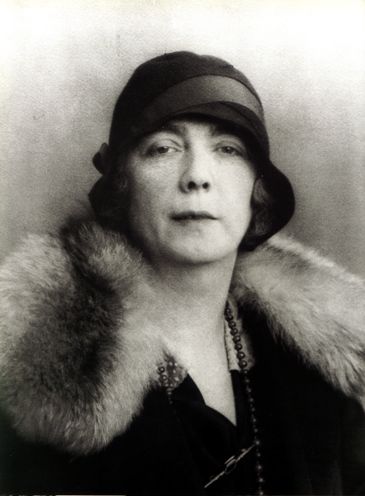
Nora Barnacle
Cu ocazia lui 16 iunie, “Bloom Day”,
“despre printi si servitoare”
Oare masculul isi cauta perechea pe masura mintii lui? Sa nu cautam rapunsul la aceasta intrebare in studii sau sondaje locale, despre preferintele sexuale ale roma^nului. Am descoperi ca roma^nul prefera sa-si aleaga o nevasta, nici prea frumoasa, nici prea scolita, cat mai putin independenta. Si frumoasa, si desteapta si de sine statatoarea este un pericol pentru linistea familiei. Banuiesc ca modestele , desi maritate bine, sufera pe ascuns, iar cele frumoase si independente sperie si sufera in singuratate. Femeia sufera , barbatul la randul lui sufera si el, frustrat, sau gelos. Frustrari si gelozii cristalizate in fantezii erotice, actul sexual cu spalatoreasa, servitoarea, camerista sau sora de caritate…
Metehne vechi , pe care le gasim in istorie nu numai la burghezii de rand ci si la capete luminate. La 150 de ani unul de celalalt , Jean Jacques Rousseau (1712-1778) si James Joyce (1882-1941). Marie-Therese Levasseur,spalatoreasa lui Jean Jacques si Nora Barnacle, camerista bardului.
Scriitor si filozof, Rousseau a aruncat semintele Revolutiei Franceze care a cutremurat si si schimbat fata Europei, Joyce la randul lui a revolutionat si schimbat fata literaturii. Mostenirea literara pe care ne-au lasat-o ne permite o apropiere intima de cei doi.
Daca Rousseau in “Confesiuni” indrazneste in premiera mondiala sa se dezbrace in fata cititorului, Joyce o face indirect, prin eroii lui. Joyce este si Leon Bloom si Stephen Dedalus. Iar pe Nora Barnacle, tovarasa sa de drum, o urmareste pas cu pas, o observa cu mirare, cu dragoste si gelozie, transformand-o pentru noi fie in Molly Bloom,(in Ulysses) fie in Bertha Rowan (in Exiles).
Marie-Therese Levasseur nu a avut norocul Norei. Jean-Jacques o intalneste in 1745 la hotelul Saint Quentin din Paris , spalatoreasa de 23 de ani care muncea din greu sa intretina o familie numeroasa. Ii declara cinic, de la bun inceput, ca nu o va parasi dar nici nu se va casatori cu ea , niciodata. Analfabeta cu un spirit care , dupa cum Rousseau marturiseste in ‘Confesiuni”,va ramane ” asa cum l-a facut natura”. Vor trai impreuna peste 30 de ani, doar moartea lui Jean-Jacques in 1778 ii va separa. Alegera facuta de filozof a surprins contemporanii si starneste mirare pana in ziua de astazi. Nu pentru cinismul si egoismul lui maniac il admiram pe Rousseau. Isi tocmea practic o servitoare care ii incalzea patul la nevoie, care “ nu ma satisface din punct de vedere moral dar care imi face o supa buna cand sunt bolnav”,(Confesiuni) si care avea sa-l slujeasca cu credinta in succesiunea diverselor lui exiluri. Sa-i urmareasca din umbra afacerile intelectual amoroase sau amoroase pur si simplu cu madame de Warens, madame d’Hodetot sau madame d’Epinay. Autorul “Contractului Social” experimenteaza printr-un contract ale carui termeni sunt bine stabiliti de la inceput, autorul lui “Emile”, “experimenteaza” facandu-i Mariei-Therese cinci copii in mai putin de sapte ani, copii care sunt incredintati “grijei publice”, crescuti la orfelinat…Cu sinceritatea uimitoare care va face istorie, Jean-Jacques vorbeste despre sentimentele lui pentru Marie in care nu poate fi gasita nici “cea mai mica scanteie de dragoste”. Si totusi, marturiseste filozoful, “alaturi de ea am trait fericit atat cat as fi putut eu sa fiu, tinand seama de desfasurarea evenimentelor din viata mea”.
“Contractul” este respectat. “Guvernanta” sau “Matusa”, asa cum o prezenta dupa imprejurari domnul ei, are grija de Rousseau pana la moartea lui in 1778. Ii mosteneste averea, manuscrisele si drepturile de autor, mai traieste inca 23 de ani, pana in 1801.
Sa se fi culcat oare Jean-Jacques cu Marie-Therese doar de vre-o cinci ori, ochind si nimerind exact , facandu-I astfel cinci copii, sa fi facut el oare amor pervers cu spalatoreasa imbatranita si fara nuri, nu stiu. Atunci contractul dintre cei doi a fost posibil si respectat. Marie-Therese ramane in istoria literaturii asa cum a fost ea sau cum credem noi ca a fost. Nu a devenit un caracter de roman, a ramas insa o figura cheie in cea mai memorabila dintre autobiografii si din biografiile care au urmat. Autobiografiile pot deveni literatura si “Confesiuni” si-au pastrat prospetimea si sunt considerate, pana astazi, mare literatura…
Ce a fost mai intai, oul sau gaina? Jean-Jacques a trait “experimentand” si a teoretizat drept consecinta, sau teoriile abstracte l-au impins la experimentari cinice? Mai degraba traieste (experimenteaza) si teoretizeaza simultan, condus atat de un talent exceptional cat si de narvul unui egoism feroce.
Cu Nora Barnacle si James Joyce este insa o cu totul alta poveste. Este o legatura pasionata care dureaza in timp, este sex fierbinte, gelozie si amor.
Istoria spune ca in anul de gratie 1904, iunie 10, “bardul” o intalneste pentru prima data pe Nora, camerista la hotelul Finn din Dublin. La 16 iunie 1904, Joyce o reintalneste pe Nora si foarte probabil la aceasta data se “comite prima noapte de dragoste.
16 iunie 1904, este unitatea de timp a romanului Ulysses, in care eroii Stephen Dedalus si mai ales Leopold Bloom, strabat Dublinul in acea zi de pomina. “Bloom Day” este un fel de zi nationala a irlandezilor, sarbatorita cu sfintenie, culoare si multa bautura, an dupa an.
Noaptea de dragoste este urmata de o relatie “pe viata”. Desi se casatoresc doar in 1931, Joyce si Nora au copii impreuna si impart viccisitudinele exilului European.
Cu ajutorul Norei, Joyce incearca sa lamureasca necunoscutul femeii si se descifreaza in confruntarea cu acest mister etern. O urmareste pe Nora, cum vorbeste, cum gandeste, cum traieste pana la cele mai marunte amanunte fizice sau altele.
In 1909 James si Nora traiesc “exilati” la Trieste. La sfarsitul lui octombrie Joyce este nevoi sa plece intr-o calatorie cu treburi la Dublin unde va ramane pana la sfarsitul lunii decembrie. Inainte de despartire isi promit unuia celuluilat ca isi vor scrie scrisori erotice. Din pacate scrisorile Norei catre James au disparut, in schimb scrisorile lui James catre Nora au supravietuit si au fost publicate pentru intaia oara in 1975, de catre Faber&Faber. Devenite celebre sub titlul “James Joyce Dirty Letters”, scrisorile sunt pornografice la extrem, intraductibile desi traductibile si pot cu usurinta fi interpretate gresit. Caci chiar daca intentia lor era sa provoace satisfactie sexuala “in absentia” si chiar daca cititorul este uimit sau excitat de un comportament sexual pervers ,descris fara paravan si menajamente, ei bine Joyce experimenteaza genial, disecand anatomia sentimentului de dragoste si apoi il reface si il sintetizeaza.
Si astfel Nora Barnacle devine Molly Bloom, cantareata de opera , nevasta onorabilului Domn Leopold Bloom, eroina capitolelor “Calypso” si “Penelopa” din “Ulysses”.
Nora Barnacle este poate o fata simpla din vestul Irlandei pe care Joyce o smulge si o aduce in Europa cosmopolita. Citandu-l pe David Hayman : ….”Nora a pastrat vitalitatea si inocenta ei provinciala impreuna cu ceea ce se intelegea pe atunci drept “trasaturi feminine” Dincolo de acestea, femeia “de la tara”, pare extrem de in acord cu moravurile dezlantuite ale “anilor 20”. Mai mult decat atat, ea ramane un obiect de examinare detaliata, de investigatie cu implicatii si nuante duse departe”.
Revenind in incheiere de unde am plecat, pana la urma deslusim in cele doua cazuri, doua pozitii fundamental deosebite ale atitudinii barbatului fata de femeia lui. Fie desconsiderare, dispret si comportare cinica, fie uimire plina de dragoste si marturisirea sincera a dificultatilor noastre de a le patrunde,"decoda"si intelege pana la capat.
Jean-Jacques Rousseau si James Joyce le-au multumit pana la urma la fel celor doua doamne, Marie-Therese si Nora. Calatoresc impreuna in eternitate...
Lucian D. Damboviteanu
Subscribe to:
Posts (Atom)